Three numbers, three checks
Property brokerage in Dubai is regulated by RERA, the Real Estate Regulatory Agency, which sits inside the Dubai Land Department (DLD). A legitimate transaction involves three identifiers.
The broker's card number (BRN) identifies the individual agent. The company's registration number (ORN) identifies the brokerage that employs them. The permit number appears on each advertisement and links it to a specific property and a signed listing agreement, issued through the Trakheesi system of the DLD.
If an agent cannot give you all three, you are not dealing with a regulated transaction. Each check takes less than five minutes, and all of them are free.
This guide covers Dubai. In the other emirates, brokers are registered with that emirate's own real estate authority, and the numbers, forms and apps differ, but the principle is the same: check the agent, the company and the advert on the official register before you pay.
Check the broker
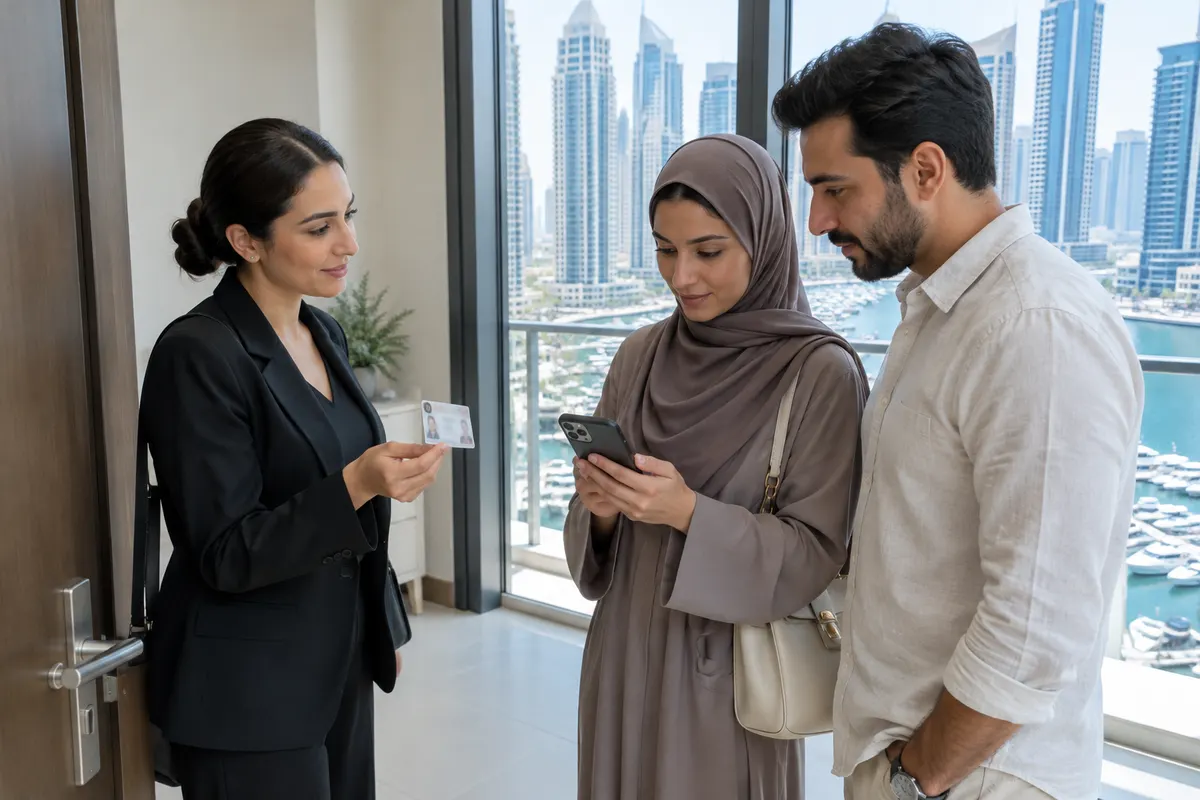
Ask the agent for the BRN and the full name, then check them on the Dubai Land Department website or in the Dubai REST app, which lets you search registered brokers and brokerages. The record should show the broker's name, photo, company and a valid status.
Compare the photo with the person you meet. Check that the brokerage on the record is the one named on the business card and in the advert. Brokers sometimes move between firms, and a card from a former employer is a flag.
Our guide to verifying a trade licence covers the company's trade licence, which is a separate check from RERA registration. Look for a real estate brokerage activity on the DET licence.
Do the check before the viewing, not after. A short call to the brokerage's office number, taken from the DLD record rather than from the advert, confirms that the agent really works there. Agents who list a property they do not represent are among the commonest problems in the market, and the call takes a minute.
Check the advert and the permit
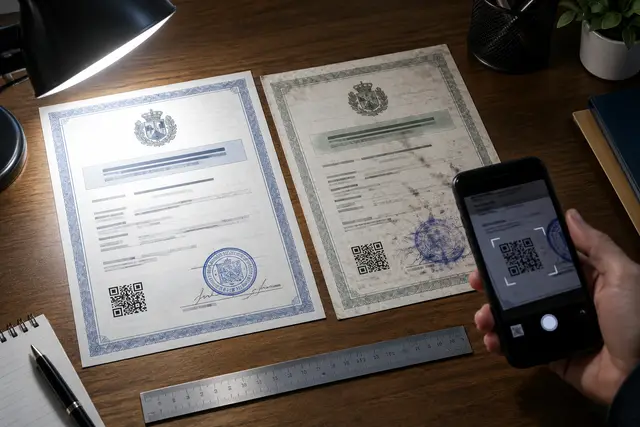
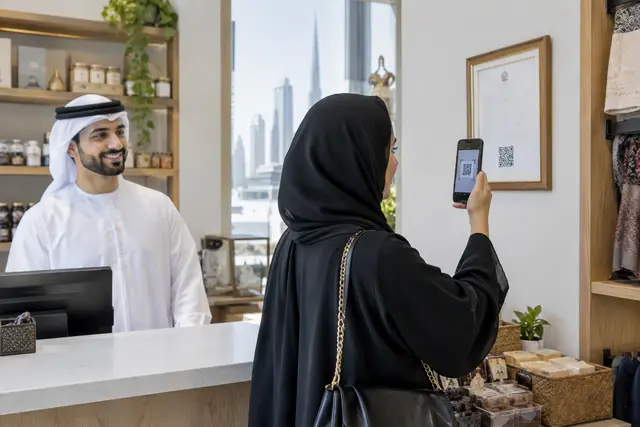
Every property advert in Dubai should display a permit number and, in most cases, a QR code. Scan the QR code or search the number in Dubai REST. The result shows the property, the owner's listing, the brokerage and the price on record.
Match what you see to the advert. If the price in the record is AED 1,800,000 and the advert says AED 1,500,000, the advert is bait. If the permit belongs to a different property or has expired, the advert is not valid.
Check the paperwork before you pay
A broker acting for a seller must have a signed listing agreement with the owner, known as Form A. A broker acting for a buyer signs a buyer's agreement, Form B. For a sale, the purchase agreement is a Memorandum of Understanding on Form F, signed by buyer and seller with the broker's details.
Ask to see the title deed or the proof of ownership, and compare the owner's name with the listing. For a rental, ask for the landlord's passport and Emirates ID, or the power of attorney if an agent acts on the landlord's behalf.
Pay deposits to the escrow account or a company account in the brokerage's name, never a personal account. Payment for a sale usually goes to the developer's escrow account or via manager's cheque, and the transfer takes place at the DLD or a registered trustee office.
What commission is normal
Sales commission is commonly 2 percent of the sale price, often paid by the buyer in Dubai resale deals and always negotiable, plus 5 percent VAT where the agency is VAT-registered. A rental commission is typically 5 percent of the annual rent, paid by the tenant, on a long-term lease.
Commission is negotiable and is stated in the agreement. Agents who demand a cash commission with no invoice, or ask you to pay it before the contract is signed, are breaching both good practice and tax rules.
Agency invoices should carry the brokerage's name, its Tax Registration Number (TRN) and the amount of VAT. Keep the receipt with the contract.
Red flags
Be wary of a price far below similar units, an agent who refuses a viewing at the building, a request for a holding fee by bank transfer before you have seen a contract, and a listing that exists only on social media with no permit.
Be wary of an agent who is unwilling to meet at the brokerage office, who pushes you to decide the same day or whose WhatsApp profile has no company name.
A rental that asks you to pay the whole year plus a deposit to a personal account before you see the Ejari draft is the classic version of this scam.
If you have paid a deposit and something is wrong
Collect the advert, messages, receipts and the permit number. Contact your bank at once to ask about recalling the transfer.
Report the advert and the agent to RERA through the Dubai Land Department's complaint channels or the Dubai REST app, and file a report with Dubai Police if the agent took money and disappeared. Rental disputes with a landlord go to the Rental Dispute Settlement Centre.
If the agent or the brokerage appears on Moathaq, send us the details through the report form. We check the listing against the register and suspend it when the registration does not match.
Any AED amounts in this guide are typical ranges for Dubai as of October 2026; prices in other emirates are often similar or lower. They are not quotes and not offers: real prices depend on the job, the company and the date, so ask for written quotes.
Frequently asked questions
Where do I look up a broker in Dubai?
On the Dubai Land Department website or in the Dubai REST app, using the broker card number. The record should show the name, photo and brokerage, and a current status.
What is the permit number on a property advert?
It is a number issued through the DLD's Trakheesi system that links the advert to a property and a signed listing agreement. Scan the QR code or search the number to see the details on record.
Can I negotiate the agent's commission?
Yes. Typical commissions are 2 percent on a sale and 5 percent of annual rent on a lease, but the amount is stated in the agreement and can be agreed before you sign.
Is Ejari required for a rental in Dubai?
Yes. A tenancy contract is registered in Ejari, and you need it for DEWA connection, visa processing and many bank procedures. A landlord or agent who avoids Ejari is a risk.