Where contractor jobs go wrong
Most disputes over fit-out, painting, plumbing and renovation work in the UAE start with the same three facts. The contractor asked for a large deposit, the scope was described in a chat message instead of a contract, and nobody checked who actually held the licence.
A deposit of 50 percent or more is the usual starting point of a loss. A contractor who has taken that money and moved on to another site has little reason to come back, and you may have no document that says what was promised.
The checks in this guide take about an hour and cost nothing. They are worth doing for any job above roughly AED 3,000, and they matter most for work inside your home, where you let strangers into your space for days.
Check 1: the trade licence and its activity
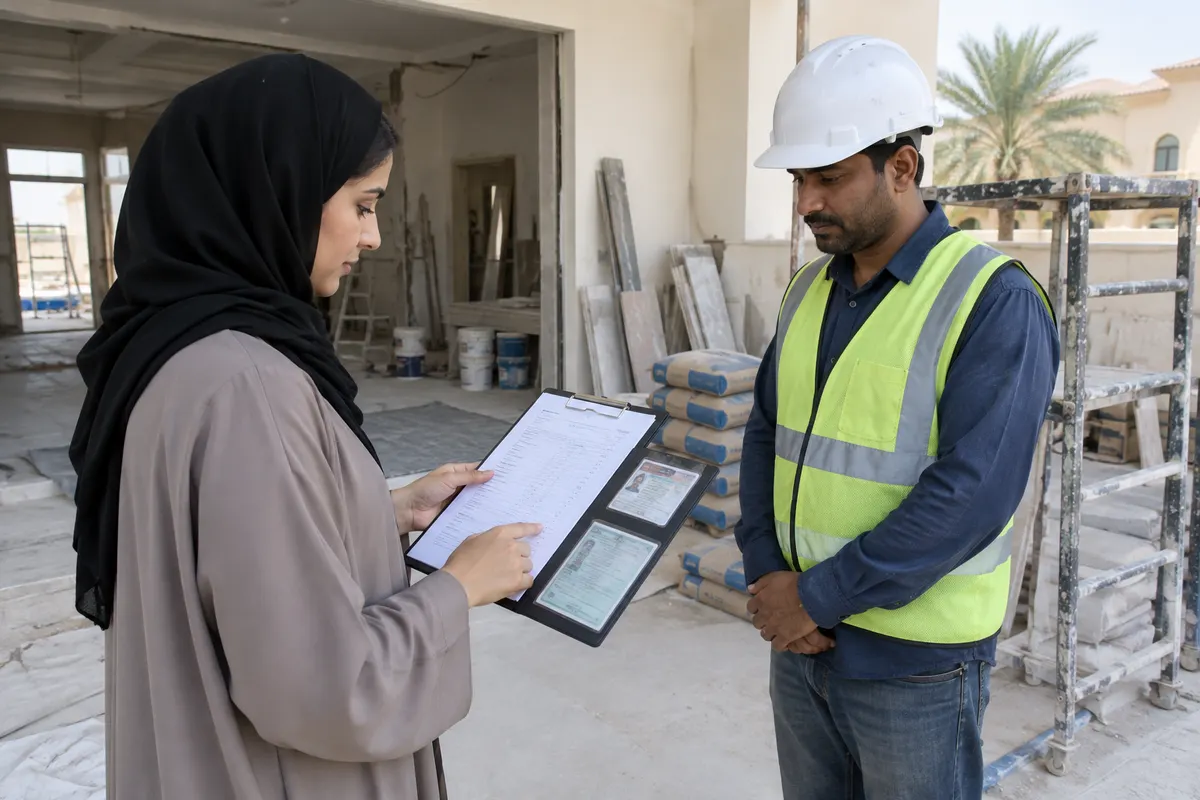
Ask for the company's trade licence number and search it on the register of the emirate's economic department (the Department of Economy and Tourism, DET, in Dubai, ADDED in Abu Dhabi, SEDD in Sharjah), or on the website of the free zone that issued it. The steps are in our guide to verifying a trade licence.
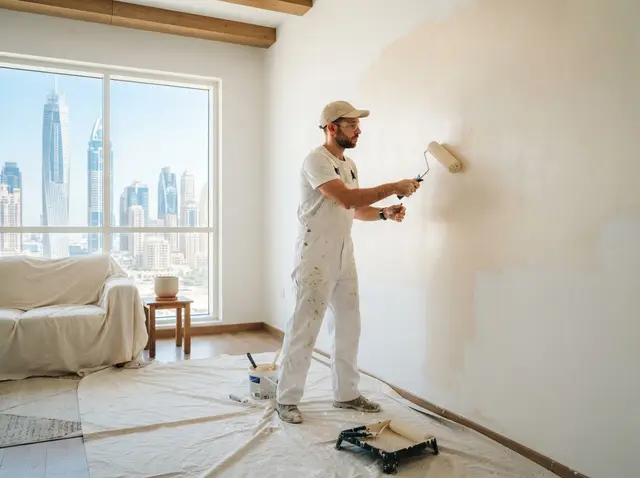
Read the activity line. A licence for "building maintenance", "interior fit-out" or "painting and decoration" fits home works. A licence for "general trading" does not. Contractors working outside their activity can be fined, and you inherit the problem when the work stops.
If a salesperson visits you but a different company signs the contract, treat the company on the contract as the contractor and run the check on that one.
Check 2: approvals for the type of work
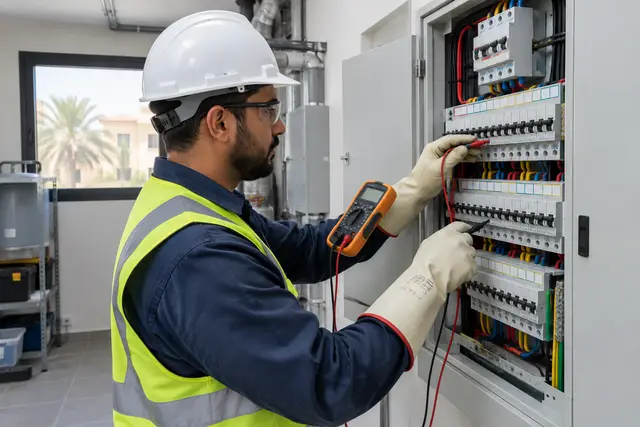
Some work needs more than a trade licence. In Dubai, electrical modifications must be done by a contractor approved by DEWA, and major structural or fit-out work in many buildings needs a Dubai Municipality classified contractor. The other emirates have their own electricity authorities and municipalities with their own approval rules, so ask which ones apply to your building. Free zones with their own regulators, such as JAFZA and its Trakhees approvals, have their own lists.
Fire alarm, sprinkler and firefighting changes require Civil Defence approval (in Dubai, from Dubai Civil Defence), and a contractor who says it is not needed for a commercial fit-out should be asked to put that in writing.
Your building adds a layer. Most towers and communities require a no-objection certificate (NOC) from the developer or owners' association before any contractor starts, plus a refundable deposit for lift protection and debris, commonly AED 500 to 2,000. A good contractor asks for the building's rules before quoting. A weak one never mentions them.
Check 3: references you can actually call
Ask for two recent clients with similar work, and call them. Photos on a website prove that someone built something, not that this contractor did.
Ask the client three questions. Did the work finish on the agreed date? Did the final price match the quote? Who came back when something failed? The third answer tells you more than the first two.
Read the contractor's reviews on Moathaq and on Google. Reviews on Moathaq come only from people who contacted the business through the platform, which makes them harder to fake. Several reviews written in the same week with the same phrases are worth a question to the owner.
Check 4: the quote and the contract
A usable quote lists the scope room by room, the materials with brand and grade, the labour, the start and finish dates and the VAT line. If the company is VAT-registered, the document shows its Tax Registration Number (TRN).
A contract adds what a quote cannot: who is responsible for permits, what happens if the work is late, how variations are priced and signed, and the defects period after handover. For a home renovation, a defects period of 6 to 12 months is common.
Ask the contractor to attach the quote to the contract and to sign both. A contractor who prefers WhatsApp to a signed paper is telling you how the dispute will go.
Check 5: payment terms that protect you
A safe payment schedule ties money to completed work. A common structure is a deposit of 10 to 30 percent, then stage payments on measurable milestones such as first fix, finishes and handover, with 5 to 10 percent held back until defects are fixed.
Pay only to a company account in the name on the licence and the contract. Keep every bank receipt.
Never pay for the whole job in advance. Prepayment is the single most common feature in the cases that reach the police and the consumer protection teams.
Red flags during the job
Watch for a crew that changes every day, materials that do not match the quote, requests for extra money for "unexpected" items that were visible at the survey, and a contractor who stops answering after the first payment.
Photograph the site at the end of each day. Compare delivered materials with the written grade. If a variation is needed, ask for it in writing with a price before the work, and keep the signed copy.
Do not make the next payment until the milestone is done. A contractor who truly needs cash flow can show you the invoice for the materials.
If it goes wrong
Start with a written notice to the contractor listing the defects or delays, the contract clause and a deadline, usually 7 to 14 days. Send it by email and by the channel you used for the contract.
If there is no reply, file a complaint with the consumer protection section of the emirate's economic department (DET in Dubai), attaching the contract, receipts and photos. For a larger sum you can take a civil claim through the courts of the emirate (Dubai Courts in Dubai, the Abu Dhabi Judicial Department in Abu Dhabi) with a lawyer, and our guide to choosing a lawyer in the UAE explains what to ask.
If the contractor took money and disappeared, or the licence was forged, report it to the police of the emirate (in Dubai, Dubai Police). A bank can sometimes act on a recent transfer, so call yours first.
Any AED amounts in this guide are typical ranges for Dubai as of October 2026; prices in other emirates are often similar or lower. They are not quotes and not offers: real prices depend on the job, the company and the date, so ask for written quotes.
Frequently asked questions
How big a deposit is normal for home works in the UAE?
Between 10 and 30 percent of the contract value is common, with stage payments after that. A request for 50 percent or more up front is a red flag, especially from a contractor you cannot verify.
Does my landlord need to approve the work?
For anything beyond cosmetic work, yes. Check your tenancy contract and ask the landlord and the building management for written approval before the contractor starts, including any NOC and deposit.
What should a written quote contain?
The trade name and licence number, the scope room by room, materials with brand and grade, labour, VAT at 5 percent, start and finish dates and the payment schedule. If any of these is missing, ask for a revised quote.
Can I check whether a contractor is classified by the municipality, such as Dubai Municipality?
Ask the contractor for its classification certificate and the category, then confirm it with the municipality (Dubai Municipality in Dubai) or the building's consultant. Large fit-out works usually require it, and small repairs may not.