Who regulates electrical work in the UAE
Each emirate has its own electricity authority or utility: DEWA in Dubai, the area's distribution company in Abu Dhabi, SEWA in Sharjah and Etihad Water and Electricity in the northern emirates. This guide uses Dubai as the worked example, where electricity is supplied and regulated by the Dubai Electricity and Water Authority (DEWA). The rules elsewhere follow the same pattern, so ask your own utility for its version of each step.
DEWA publishes the regulations for electrical installations, approves the contractors who may carry out certain work and inspects installations before they are connected.
Inside a building, three parties have a say. DEWA sets the technical rules for the installation. The building owner or the owners' association sets rules about what a tenant may change. The local authority, which in Dubai is Dubai Municipality or a free zone body such as Trakhees in JAFZA and elsewhere is the emirate's municipality, controls building works.
A homeowner or tenant usually meets this system in one of three ways: a utility connection, a modification that needs a permit, or a fault that needs a fix. Knowing which one you are in tells you who to call.
What a handyman or electrician can do without a permit
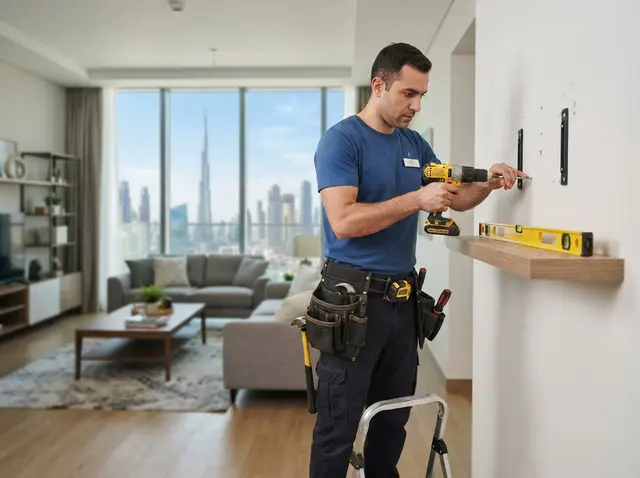
Like-for-like replacements inside an existing, working installation are generally treated as maintenance. That includes changing a socket or a switch, replacing a light fitting, replacing a ceiling fan on an existing point, swapping a faulty circuit breaker for one of the same rating and re-fixing loose connections.
The person doing it should still be competent and insured, and the work should leave the installation safe. A socket replacement costs roughly AED 50 to 120 including the part, and a light fitting AED 80 to 200 including labour.
Do not use maintenance rules to justify anything that changes the circuit. Moving a socket, adding a point, increasing the load on a circuit or fitting a heavier appliance is a modification, not maintenance.
What needs a DEWA-approved contractor (Dubai)
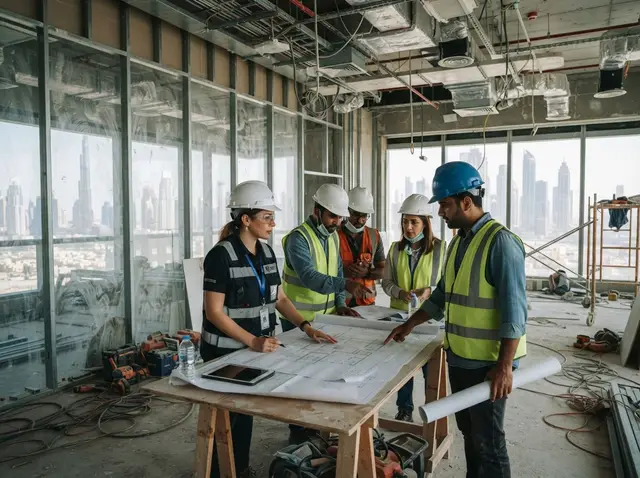
In Dubai, modifications to the installation need a contractor approved by DEWA, working to its regulations, and in many cases an approval before work starts. Typical examples are a new circuit, a change to the distribution board, an increase in the building's electrical load, new wiring for a kitchen or a home extension, and the installation of a home EV charger.
For an EV charger, DEWA has its own application route, and the installer should arrange the approval and sign off the installation. A charger fitted without it can void insurance and may be disconnected.
Ask the contractor for the DEWA approval certificate and for the permit reference. Ask for a completion certificate after the work. Keep these with your tenancy documents. In the other emirates, ask the contractor which approvals your utility requires and for the same certificates.
Your landlord and your building
If you rent, any change beyond a like-for-like replacement needs the landlord's written consent, and in most towers and communities it needs a no-objection certificate (NOC) from the building management. The management may also require a refundable deposit, typically AED 500 to 2,000, and an approved contractor.
In Dubai, a new DEWA connection or a transfer into your name requires the tenancy contract registered in Ejari and your Emirates ID. DEWA asks tenants for a refundable security deposit, currently AED 2,000 for an apartment and AED 4,000 for a villa, subject to change. Check the current amounts on the DEWA website. Utilities in the other emirates set their own deposits and documents.
Electrical faults in the common parts of a building, such as the riser or the main distribution board, are the building's responsibility, not yours or your electrician's.
What electrical jobs cost
As of October 2026, an electrician call-out and inspection commonly costs AED 100 to 200, often credited against the repair. Replacing a circuit breaker typically costs AED 120 to 300 with the part, and installing a residual-current device (RCD) on a circuit AED 250 to 600.
Adding a new socket or light point runs AED 150 to 400 depending on the wall and the cable route. A distribution board upgrade for an apartment runs from AED 800 to 3,000 depending on the number of ways. A home EV charger installation runs AED 1,500 to 4,500 excluding the charger and any utility fees. These are typical Dubai prices; in the other emirates prices are often similar or somewhat lower.
Prices rise for after-hours work, for old buildings with unmarked wiring and for work that needs a building NOC. Our electrician price guide lists the full ranges.
Safety signs you should never ignore
Act on a burning smell near a socket or the distribution board, a socket or plug that feels hot, a breaker that trips repeatedly, flickering lights across several rooms, buzzing from the board, or a tingle when touching an appliance.
Switch off the affected circuit at the board. If you smell burning or see smoke, switch off the main supply if it is safe to reach it, leave the area and call Civil Defence on 997. For a power fault in the supply, call your utility; in Dubai that is DEWA on 991.
A repeated trip means a fault, and resetting it risks a fire. Call a licensed electrician and describe what you saw.
Red flags
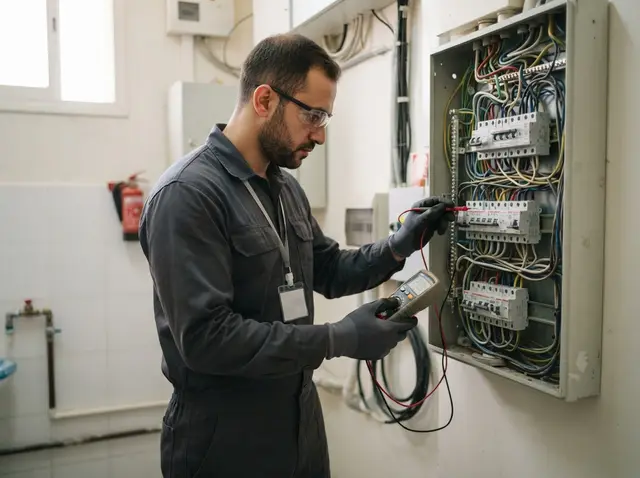
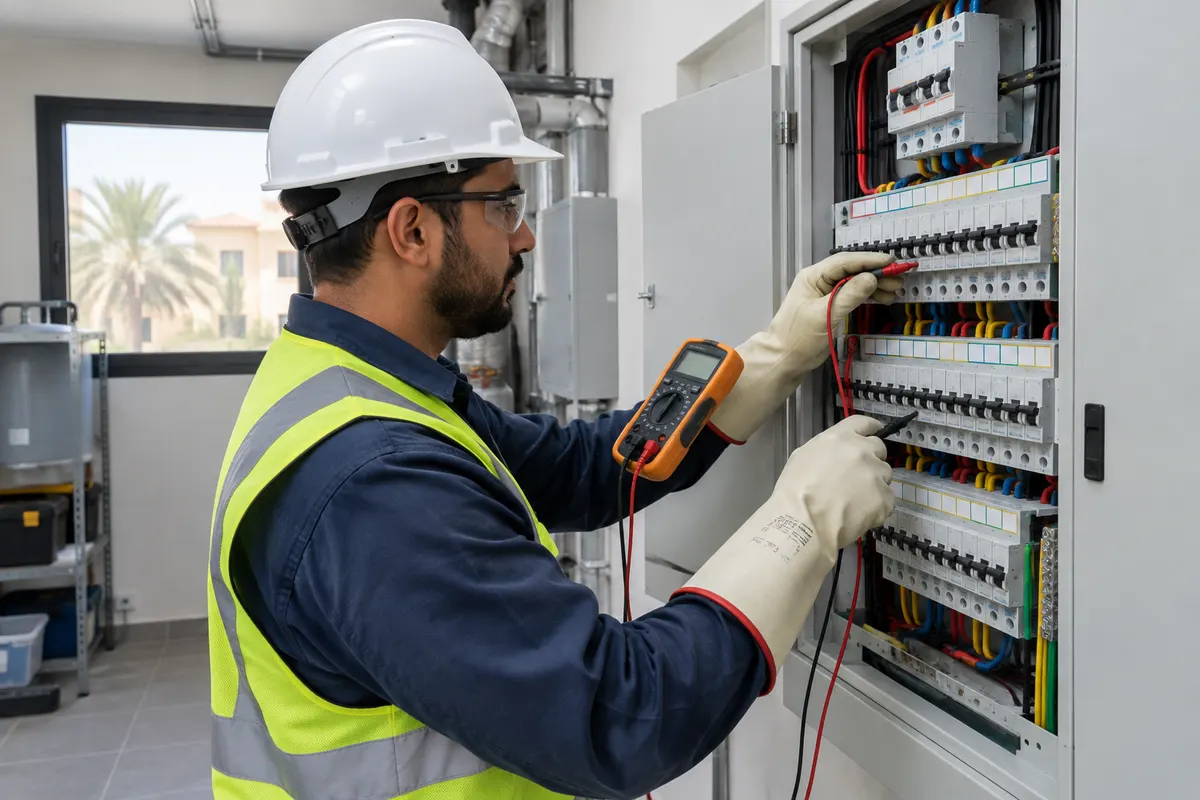
Be wary of an electrician who does not isolate the circuit before working, who has no testing equipment, who offers to wire a new point with no earth, or who uses cable much thinner than the existing run. Cheap sockets and unbranded breakers are false economy, and in a fire they are the first thing an insurer asks about.
Be wary of a quote by message that says "AED 300 for everything" with no inspection. Be wary of any person who says you do not need the building's approval, or that an approved contractor (DEWA-approved in Dubai) is not needed for a new circuit, because the risk then lies with you.
Check the company's licence and activity with our guide to verifying a trade licence.
If unapproved work was done, or it went wrong
If you find that work in your home was done without approval, stop using the affected circuit and ask a contractor approved by your utility (DEWA in Dubai) to inspect and certify it. Rectifying is cheaper than the cost of a fire or an insurance dispute.
If the electrician caused damage, ask for the repair in writing and keep the invoice, photos and messages. A licensed company should carry public liability insurance that covers damage to your property.
For a dispute with a licensed company, the consumer protection section of the emirate's economic department (DET in Dubai, ADDED in Abu Dhabi, SEDD in Sharjah) takes complaints. For injury or fraud, call the police on 999 in an emergency; in Dubai the non-emergency number is 901.
Any AED amounts in this guide are typical ranges for Dubai as of October 2026; prices in other emirates are often similar or lower. They are not quotes and not offers: real prices depend on the job, the company and the date, so ask for written quotes.
Frequently asked questions
Can a handyman change a socket in a rented flat?
A like-for-like replacement on an existing point is generally maintenance, and costs AED 50 to 120. Moving a socket or adding a point is a modification and needs a qualified electrician and your landlord's consent.
Do I need DEWA approval to install an EV charger at home?
In Dubai, yes. DEWA has an application process for home chargers, and the installer should handle it. In the other emirates, ask your utility. Ask for the approval reference and the completion certificate before you pay in full.
How much is the DEWA connection deposit for a tenant?
In Dubai, currently AED 2,000 for an apartment and AED 4,000 for a villa, refundable on disconnection. The amounts can change, so check DEWA's website before applying.
Why does my breaker keep tripping?
Common causes are an overloaded circuit, a faulty appliance or water in a socket. Unplug appliances and reset once. If it trips again, do not keep resetting. Call an electrician.