The short answer: what kids' activities cost in Dubai
A weekly group class for a child in Dubai, such as swimming, football, dance, martial arts or art, typically costs AED 60 to 150 a session, and most centres sell it as a monthly plan or a term of 10 to 12 weeks. Private lessons, such as a one-to-one swimming or music lesson, typically cost AED 150 to 350. A holiday camp typically costs AED 150 to 400 a day, or about AED 600 to 1,800 a week. These are typical prices as of November 2026, and they vary with the area, the venue, the coach and what is included.
Before you pay for a term or a camp, check four things:
- The licence. The centre has a valid trade licence, and, depending on the activity, a permit from the Dubai Sports Council or the Knowledge and Human Development Authority (KHDA).
- Safeguarding. Staff are vetted, the centre has a clear policy on supervision, collection and first aid, and it can tell you how it handles a concern about a child.
- A trial first. Most centres offer a free or paid trial class. Use it before you sign up for a full term.
- The refund terms, in writing. Know what happens if your child is ill, you move, or the class is cancelled.
This guide goes through the activities that suit each age, then prices, licences, safety and refunds.
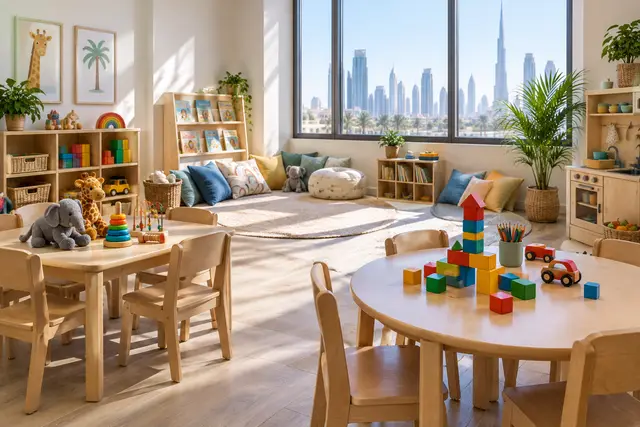
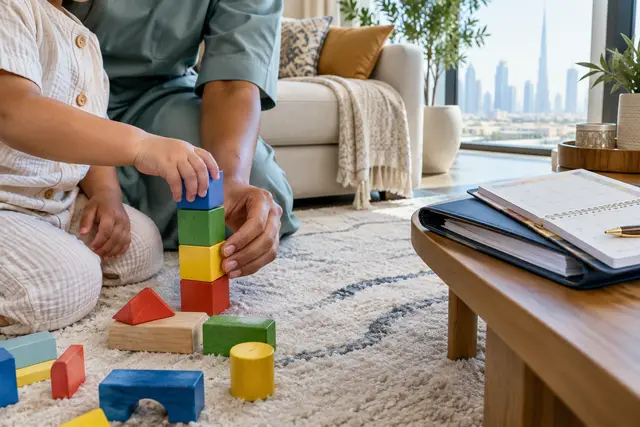
Babies, toddlers and pre-schoolers (0 to 5)
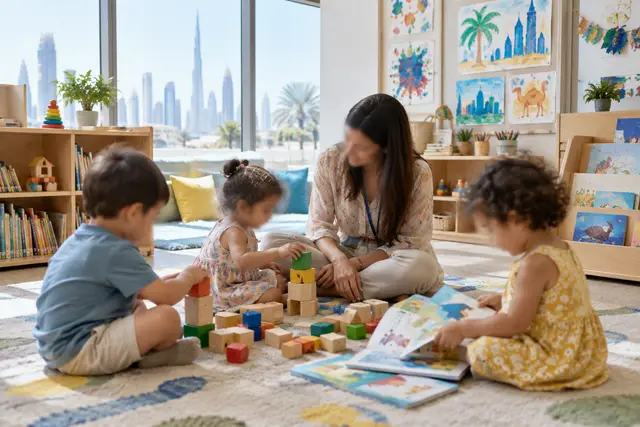
At this age the aim is play, movement and confidence, not skill. Classes are short, usually 30 to 45 minutes, and for the youngest children a parent or carer joins in.
- Baby and toddler swimming: parent-and-child sessions in warm, shallow pools, focused on water confidence and safety. Many centres start from a few months old.
- Music and movement: singing, rhythm, simple instruments and dance games, often from about six months.
- Sensory and messy play: paint, sand, water and textures, popular for children under three.
- Mini sports and gymnastics: balance, climbing, ball skills and tumbling, usually from about 18 months to five years.
- Pre-ballet and creative dance: often from age three.
- Early language and story sessions: Arabic, English and other languages through songs and stories.
Look for small groups, staff who are calm with very young children, clean changing areas and a clear rule on illness, so that sick children stay at home. If your child is not yet at nursery, a weekly class is a gentle way to get used to groups. For full-day care, read our guide to choosing a nursery in Dubai. Nurseries themselves need KHDA approval for the extra activities they run each year, and those activities must stay optional.
Primary-age children (6 to 12)
This is when most children try several activities and start to settle on one or two. Classes become longer, usually 45 to 90 minutes, and many follow the school term.
- Swimming: stroke lessons in small groups, often with levels or badges. Swimming is one of the most useful skills for a child in a city with so many pools and beaches.
- Team sports: football, basketball, cricket, netball and rugby academies, with training once or twice a week and, for some, weekend matches.
- Martial arts: karate, taekwondo, judo and jiu-jitsu, with a belt system that gives children clear goals.
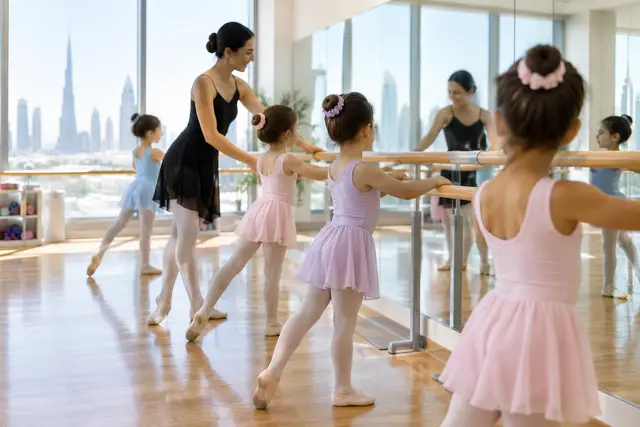
- Gymnastics, dance and ballet: some schools prepare children for graded exams.
- Tennis, padel, climbing and horse riding: usually pricier because of courts, equipment or animals.
- Music: piano, guitar, violin, drums and singing, as group or private lessons. Many teachers prepare children for graded music exams.
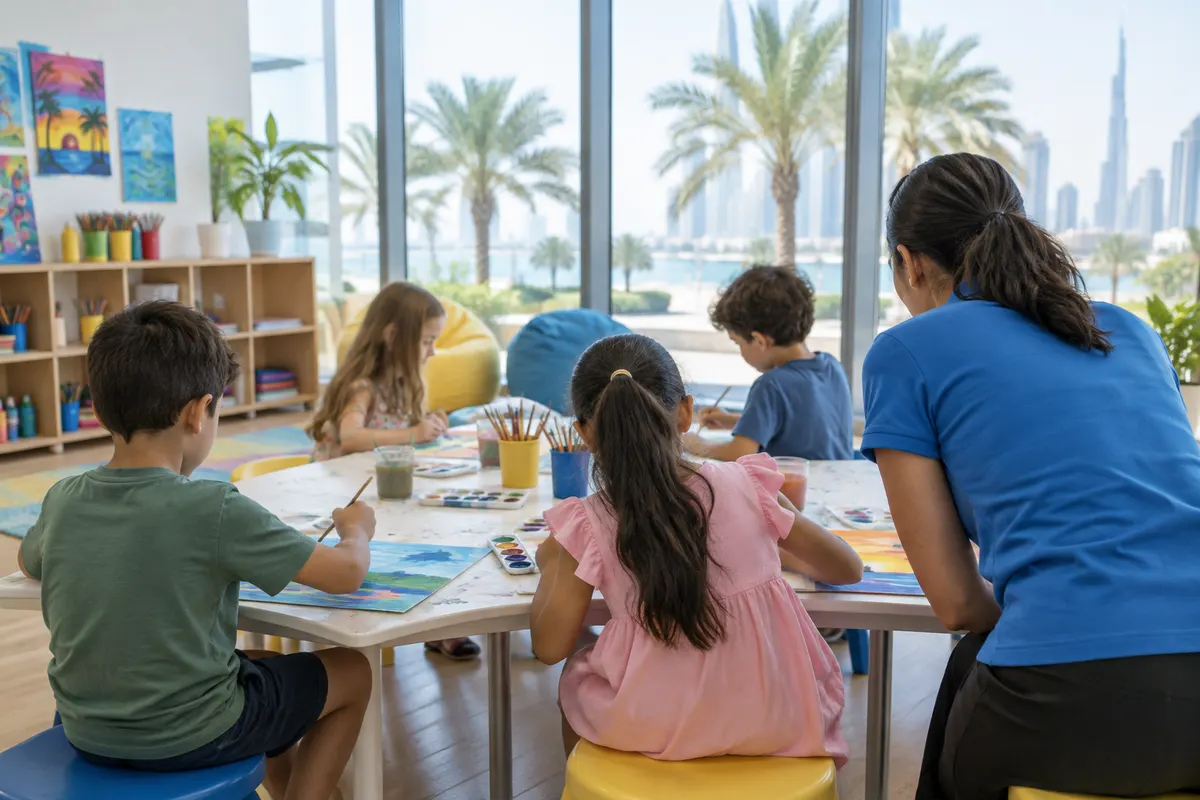
- Art, drama, coding and robotics: popular as after-school clubs and holiday courses.
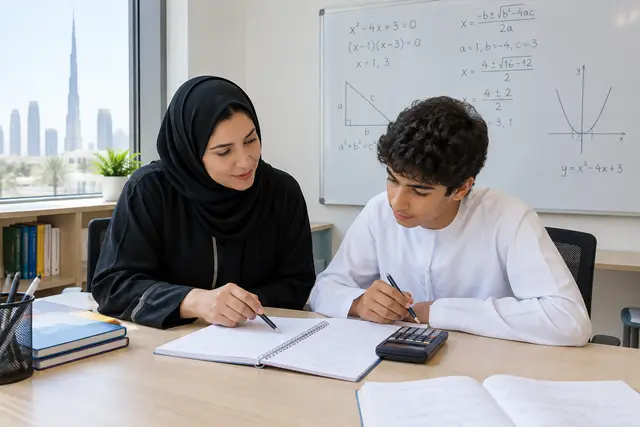
- Academic support and languages: Arabic, Quran, maths and reading clubs. For one-to-one help, see tutors.
Do not overload the week. Two or three activities, with free afternoons between them, usually work better than one every day. Ask the school what after-school activities it offers on site, since these can be cheaper and save a drive.
Teenagers (13 to 17)
Teenagers usually want either a serious path in one activity or a social one with friends. Both are fine.
- Competitive squads and teams: swimming squads, football and basketball teams, and tennis or padel coaching with tournaments. Expect more sessions a week and higher fees.
- Fitness and strength: some gyms run supervised youth programmes. Ask about the minimum age and whether a trained coach supervises the session.
- Music, art and design: higher grades, portfolios for further study, music production and digital art.
- Technology: coding, robotics, game design and competitions.
- Drama, debating and public speaking: good for confidence and for university applications.
- Outdoor and water sports: sailing, kayaking, diving and climbing, where the safety record and the instructor's qualifications matter most.
- Volunteering and leadership programmes: often run through schools, community groups and award schemes.
At this age, let your teenager choose and visit the class with you. Ask how progress is measured and whether there is a path to competitions, exams or certificates if they want one.
Holiday camps: summer, winter and spring breaks
Holiday camps run in most school breaks, with the biggest choice in the long summer holiday. They come in a few types:
- Multi-activity camps: a mix of sport, art, games and outings, usually for ages 4 to 12. The most common choice for working parents.
- Sports camps: football, swimming, tennis or general sport, often run by academies at schools or clubs.
- Creative and STEM camps: art, drama, music, coding, robotics or science.
- Nature and museum programmes: shorter days with an education focus, sometimes run by public venues.
As a rough guide for November 2026, a camp day typically costs AED 150 to 400, and a week AED 600 to 1,800. One or two weeks for one child often comes to AED 600 to 1,800, and a full summer of six to eight weeks to AED 4,000 or more. Many camps give discounts for siblings, early booking or several weeks.
Before you book a camp, ask:
- the exact daily hours, and whether early drop-off or late pick-up costs extra
- what the price includes: lunch, snacks, transport, trips, materials or a T-shirt
- the ratio of staff to children for your child's age group, and how the groups are split by age
- how children are kept cool and hydrated in summer, and how much time is spent outdoors
- who can collect your child, and how identity is checked at pick-up
- whether you can book single days or a trial day first
Popular camps fill early, especially in the first and last weeks of the summer holiday.
Typical prices for classes in Dubai (November 2026)
These are typical ranges we see as of November 2026. They are not official prices, and they vary with the area, the venue, the group size and the coach's experience.
- Group swimming lesson: AED 60 to 120 a session. Private lessons AED 150 to 350.
- Football or other team sport academy: AED 60 to 120 a session, often sold as a term of AED 700 to 1,800.
- Martial arts: AED 300 to 700 a month for one or two sessions a week, plus grading and uniform fees.
- Dance, ballet or gymnastics: AED 70 to 150 a class, or AED 800 to 2,000 a term. Exam and show costumes are often extra.
- Music lesson: AED 150 to 350 for a private lesson of 30 to 60 minutes. Group music classes cost less.
- Art, drama, coding or robotics: AED 80 to 200 a session, depending on materials and kit.
- Tennis, padel or horse riding: usually at the top of these ranges or above.
Watch for costs on top of the class fee:
- registration or membership fees, often charged once a year
- uniforms, kits, shoes and equipment
- exam, grading, competition or show fees
- VAT, if it is not already included in the quoted price
- charges for make-up classes or for changing the day
Ask for the total cost of a full term in writing, so you can compare centres fairly.
Who licenses kids' activity centres in Dubai
There is no single licence for "kids' activities". Which permit a centre needs depends on what it teaches, so ask the centre which licence and permit it holds, then check them.
- Trade licence. Every business needs one, issued by Dubai's Department of Economy and Tourism or a free zone authority. Check that it is valid and that the activity on it matches what the centre does. Our guide on how to verify a Dubai trade licence shows you how.
- Dubai Sports Council (DSC) for sport. Under Executive Council Resolution No. 1 of 2020, sports academies, sports centres and fitness centres in Dubai need a DSC permit. Coaches and professional staff must be registered with the DSC before they can work at a sports establishment, and the establishment must hold insurance with an insurer licensed in Dubai. Ask whether your child's coach is registered.
- KHDA for training and education courses. Under Executive Council Resolution No. 50 of 2015, private training institutes in Dubai need KHDA authorisation, may only teach the programmes listed on it, and must tell KHDA their fees. You can search the KHDA directory of training institutes by name on the KHDA website. Many tutoring, language, art, music and coding centres sit here, but not every activity falls under KHDA, so ask the centre.
- Schools and nurseries. Activities run by a school or a nursery on its own site come under that school's or nursery's KHDA permit, and KHDA approves the activities they plan each year.
Outside Dubai, the bodies are different. In Abu Dhabi, Sharjah and the other emirates, ask the centre which local authority licenses it and check with that authority. If a centre cannot tell you which licence it holds, look elsewhere.
Safeguarding: how to tell a centre takes child safety seriously
Every child in the UAE, citizen, resident or visitor, is protected by Federal Law No. 3 of 2016 on Child Rights, known as Wadeema's Law, which covers neglect and abuse and penalises leaving children without supervision. A good centre goes further and can explain its own rules without hesitation. Ask:
- Staff checks. Are coaches and teachers background-checked, with references, before they start? For sport, are they registered with the Dubai Sports Council?
- Supervision. How many staff are with each group? Is a child ever alone with one adult behind a closed door? Good centres keep doors with windows, or rooms open and visible.
- Changing rooms and toilets. Who helps young children, and how?
- Photos and social media. Does the centre ask your permission before posting pictures of your child?
- First aid. Is a first-aid trained person on site at every session? For swimming, is a qualified lifeguard on duty besides the teacher?
- Collection. Who can collect your child, and what happens if you are late?
- Concerns. Who is the named person for safeguarding, and how would they report a concern about a child?
Warning signs: staff who discourage you from watching a trial, no clear collection rule, a coach who messages children privately, crowded classes with one adult, and vague answers about first aid. In an emergency call 999. For a non-emergency police matter in Dubai, call 901.
Trial classes, contracts and refunds
Most centres offer a trial class, sometimes free and sometimes paid and then deducted from the term fee if you join. Use it well:
- Go to the trial and watch. See how the coach speaks to the children, whether your child is in the right group for their age and level, and how the session ends.
- Ask for the price list and terms in writing before you pay: term dates, number of sessions, the cancellation rule and any extra fees.
- Read the refund and make-up policy. Ask what happens if your child is ill, if you travel, if you move, if the centre cancels a class, or if the coach changes.
- Pay by card or bank transfer and keep the receipt. Avoid paying a full year in cash to an individual.
- Start small. Pay for a month or a term, not a full year, until you are sure your child enjoys the activity.
Many centres do not refund a term once it has started, and offer make-up classes or credit instead. That can be fair, but only if you agreed to it in writing before you paid. A refund for a change of mind usually depends on the policy you accepted, so read it first.
If a business in Dubai does not deliver what you paid for and will not resolve it, you can file a consumer complaint with Dubai's Department of Economy and Tourism. Keep the receipt, the written terms and your messages with the centre. For centres regulated by KHDA or the DSC, you can also raise the matter with that authority.
How to find and compare kids' activity centres on Moathaq
A simple way to shortlist:
- Decide what your child wants to try and how many days a week you can manage.
- Browse kids' activity providers on Moathaq, or go straight to kids' activities in Dubai, and filter by area so the drive stays short.
- Pick two or three centres and ask each for the term price, what it includes, the group size and the refund policy.
- Check the licence and, for sport, the DSC permit and coach registration. For training and education courses, search the KHDA directory.
- Book a trial class, watch it, and ask your child what they thought.
- Pay for one term, keep the receipt, and review at the end.
On Moathaq, a verified badge means we have checked the business's trade licence against official sources. It does not rate the teaching or replace your own visit. Read what a verified badge on Moathaq means for exactly what we check. And if you are also looking at childcare, our guides on choosing a nursery and hiring a nanny cover the rules.
Any AED amounts in this guide are typical ranges for Dubai as of October 2026; prices in other emirates are often similar or lower. They are not quotes and not offers: real prices depend on the job, the company and the date, so ask for written quotes.
Frequently asked questions
Can a private tutor help my child at home?
Yes, but in the UAE a tutor who is not working through a licensed centre needs the private teacher work permit. Read choosing a private tutor in Dubai for the permit, typical rates and what to ask.
How much do kids' classes cost in Dubai?
A weekly group class typically costs AED 60 to 150 a session as of November 2026, often sold as a monthly plan or a term of 10 to 12 weeks. Private lessons typically cost AED 150 to 350. Prices vary with the activity, area and coach, and registration, kit and exam fees are often extra.
How much is a summer camp in Dubai?
Typically AED 150 to 400 a day, or about AED 600 to 1,800 a week, as of November 2026. A full summer of six to eight weeks often costs AED 4,000 or more for one child. Check what the price includes, such as lunch, transport and trips, and ask about sibling and multi-week discounts.
Does a kids' activity centre in Dubai need a KHDA licence?
It depends on the activity. Private training and education institutes need KHDA authorisation, and you can search KHDA's directory of training institutes. Sports academies and sports centres need a permit from the Dubai Sports Council instead. Every centre also needs a valid trade licence. Ask the centre which permit it holds and check it.
Do sports coaches in Dubai have to be registered?
Yes. Under Executive Council Resolution No. 1 of 2020, coaches and professional staff must be registered with the Dubai Sports Council before they can work at a sports establishment, and the establishment must not employ unregistered coaches. Ask the academy to confirm that your child's coach is registered.
What age can children start activities in Dubai?
Parent-and-baby swimming and music classes often start from a few months old. Mini sports, gymnastics and pre-ballet usually start from about 18 months to three years. Team sports, martial arts and instrument lessons are common from about five or six. Each centre sets its own minimum age, so ask before you book.
Can I get a refund if my child stops a class?
It depends on the written terms you accepted. Many centres do not refund a term once it has started and offer make-up classes or credit instead. Read the policy before you pay, start with a month or a term, and keep your receipt. If a Dubai business does not deliver what you paid for, you can complain to Dubai's Department of Economy and Tourism.
Sources
Fees, rules and steps in this guide were checked against these pages. Official sites can change without notice, so confirm the current fee before you pay.
- Dubai Legislation Portal: Executive Council Resolution No. (1) of 2020 Regulating Sports Establishments and Sports Events in the Emirate of Dubaidlp.dubai.gov.ae
- Dubai Legislation Portal: Executive Council Resolution No. (50) of 2015 on training institutes in Dubaidlp.dubai.gov.ae
- KHDA: Directory of training institutes in Dubaiweb.khda.gov.ae
- KHDA: Approval for organising activities and events for early childhood centresweb.khda.gov.ae
- UAE Government portal: Children's safetyu.ae