The short answer
As of November 2026, laser hair removal in Dubai typically costs AED 100 to 500 per session for underarms and AED 450 to 3,500 per session for a full body, and most people need a course of several sessions. Botox typically costs AED 30 to 60 per unit, or roughly AED 800 to 1,500 per treated area when a clinic prices by area.
The price matters less than where you have it done. In Dubai, both treatments count as medical procedures. Laser hair removal must happen in a health facility licensed by the Dubai Health Authority (DHA), and cosmetic Botox may only be injected by a trained, licensed doctor. A salon, a spa or a home visit is not the place for either.
This guide covers how each treatment works, what drives the price, who is allowed to do it, and how to check a skin clinic and a dermatologist on the official register before you pay. When you are ready, you can compare licence-checked dermatology and skin clinics on Moathaq.
How laser hair removal works and how many sessions you need
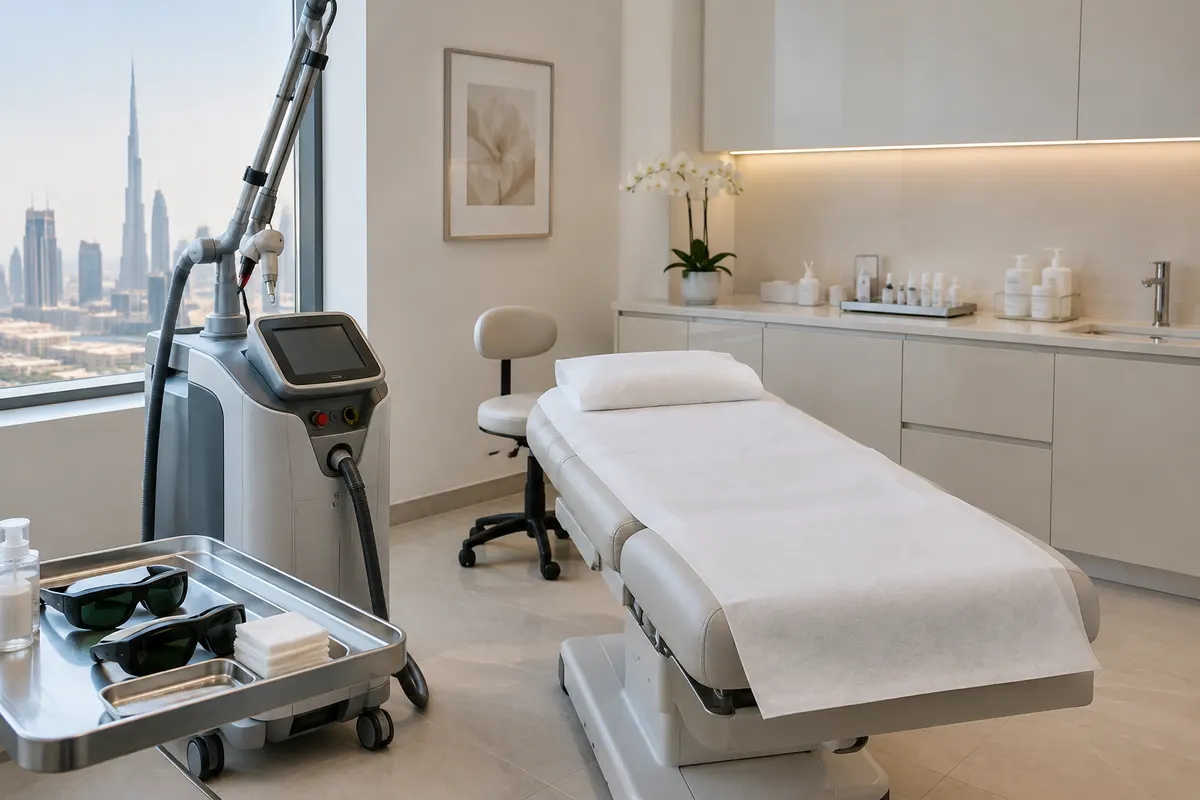
A hair removal laser sends light into the skin. The pigment in the hair absorbs it, and the heat damages the follicle so it grows back slower, finer or not at all. It works only on hair in its active growth phase, which is why one session is never enough. Different hairs are in that phase at different times.
Most clinics plan a course of about 6 to 8 sessions for an area, spaced 4 to 8 weeks apart, and some areas and hair types need more. Results vary from person to person. Laser reduces hair. It does not promise that every hair is gone for good, and some people book a top-up session later.
Skin types and laser types
Laser works by targeting pigment, so the contrast between your skin and your hair matters. Dark hair on lighter skin usually responds best. Very fair, red or grey hair responds poorly. Darker skin can be treated, but it needs the right device and settings, and that is a decision for the treating doctor.
Clinics in Dubai use several kinds of devices. The DHA's own standard describes them in neutral terms:
- Alexandrite: fast and widely used, generally suited to lighter and olive skin.
- Diode: covers large areas quickly and is often used on a wide range of skin tones.
- Long-pulse Nd:YAG: can be used on all skin types, including darker and tanned skin, but some people find it less comfortable.
- IPL (intense pulsed light): a flash lamp, not a true laser, used for hair reduction and other skin treatments.
Do not choose a device by its brand name in an advert. Ask the doctor which device suits your skin and why.
Laser hair removal cost in Dubai
Published price lists in Dubai vary widely, so treat these as typical ranges per session as of November 2026, not quotes:
- Underarms: AED 100 to 500.
- Bikini line or full bikini: AED 150 to 800.
- Full legs: AED 300 to 2,000.
- Full body: AED 450 to 3,500, depending on whether the face, bikini, chest and back are included.
Men's treatments often cost more than women's for the same area, because the areas are larger and the hair is coarser.
What moves the price
- The package. A course of 6 or 8 sessions paid upfront usually costs much less per session than single visits.
- What "full body" means. Very low full-body offers often leave out the face, the bikini area, or the chest and back. Ask for the list of included areas in writing.
- The setting. A hospital or a clinic with a consultant dermatologist on site may charge more than a small outpatient clinic.
- The doctor's review. Some clinics include the consultation and a patch test in the price, others charge for them separately.
Before you pay for a package, ask what happens if you need to pause because of pregnancy, illness or travel, and whether unused sessions can be refunded or transferred. Get the answer in writing. VAT of 5 percent applies if the clinic is VAT-registered.
Botox in Dubai: what it is and who may inject it
Botox is the best-known brand of botulinum toxin type A, a prescription medicine injected in small doses to relax specific muscles. In cosmetic use it softens lines such as forehead lines, frown lines and crow's feet. Other brands exist, and their units are not always equal, so a lower price per unit of one brand does not always mean a cheaper treatment.
Dubai's rules are set out in the DHA's Standards for Non-Surgical Cosmetic Procedures. The main points for you as a patient:
- Cosmetic Botox and fillers are classed as prescription-only medicines and may only be given by a trained and privileged licensed physician.
- Non-surgical cosmetic procedures should take place in a DHA-licensed health facility whose licence covers dermatology or plastic surgery, such as a hospital, a day surgery centre or an outpatient clinic.
- A face-to-face consultation before the procedure is mandatory. A remote consultation or a home-visit assessment is not acceptable.
- You should sign a written informed consent that is confirmed again on the day of the treatment.
- Cosmetic Botox and fillers are not permitted for anyone under 18.
- Under the same standard, beauty therapists and nurses do not inject cosmetic Botox.
In Abu Dhabi the Department of Health (DoH) licenses clinics and practitioners, and in the northern emirates the Ministry of Health and Prevention (MOHAP) does. Their detailed rules differ, but the basic test is the same everywhere: a licensed doctor, in a licensed clinic.
Botox price in Dubai
As of November 2026, typical prices are AED 30 to 60 per unit for the original brand, and some other brands are priced lower per unit. Clinics that price by area typically charge around AED 800 to 1,500 per area. The total depends on how many units the doctor decides you need, which is why a quote should state the brand and the number of units, not just a total.
Who may do laser hair removal, and why salons cannot
The DHA standard allows beauty therapists to perform a short list of procedures in a salon, but it makes two clear exceptions: laser hair removal and IPL, and microneedling. Those must be done in a DHA-licensed health facility.
Inside that facility, the laser can be operated by a doctor, or by a registered nurse, assistant nurse or beauty therapist who holds the DHA "Laser Hair Technician" title on their licence. That title requires an accredited training course and supervised hands-on cases. The treatment follows a plan written by the treating physician, and a dermatologist, plastic surgeon or another privileged physician supervises it.
In plain terms, a beauty salon is the right place for waxing, threading and facials, and a licensed clinic is the right place for a medical laser. If a salon offers "laser" in a back room, ask which health facility licence covers it. If there is no answer, walk away.
The consultation and possible side effects
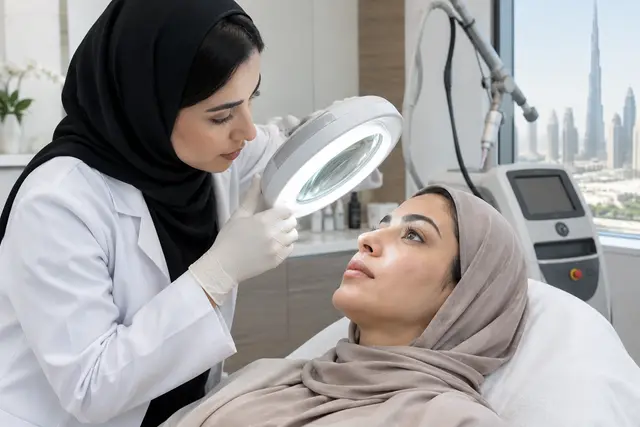
A proper first visit is a conversation, not a sales pitch. Expect the doctor to ask about your medical history, medicines, allergies, pregnancy or breastfeeding, recent sun exposure and any past reactions. For laser, many clinics do a patch test on a small area first.
Questions worth asking at the consultation:
- Who will do my treatment, and what is their DHA licence category?
- Which device or which brand of product will you use, and why does it suit me?
- How many sessions or units do you expect, and what is the total cost?
- What side effects should I expect, and what should make me call you?
- What should I avoid before and after, such as sun, tanning or certain skin products?
Side effects in plain terms
For laser hair removal, the common reactions are short-lived redness, swelling and discomfort in the treated area. Less often, people get blistering, changes in skin colour that can sometimes be lasting, or infection. Following the aftercare instructions and keeping the area out of the sun lowers the risk.
For Botox, the common reactions are small bruises, redness or a mild headache. Less often, the product affects a nearby muscle and causes, for example, a drooping eyelid or brow that usually fades as the product wears off. The effect itself is temporary and lasts a few months.
Your doctor should explain these in a language you understand and give you written information. If something feels wrong after a treatment, contact the clinic, and if needed, a doctor. If you are looking for other women's health services, you can also compare licensed women's health clinics.
Some readers ask whether Botox is haram. That is a religious question, and the right person to answer it is a scholar you trust.
How to check the clinic and the practitioner
Checking takes ten minutes and is free. Do it before you pay a deposit.
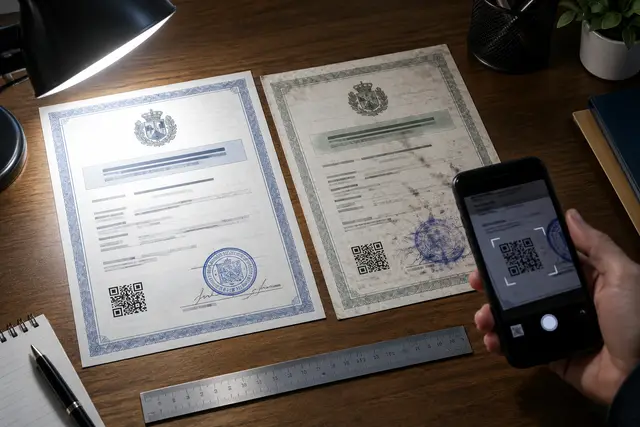
- Ask for the facility licence. A licensed clinic displays it at reception. Note the facility name exactly as it appears.
- Search the DHA register in Dubai. The DHA's Sheryan medical directory, reached from the DHA website, lets you search licensed professionals by name and see their licence category, and search health facilities and the specialties they are licensed for.
- Check the doctor, not just the clinic. Ask for the name of the doctor who will inject or supervise, and look them up. A specialist or consultant dermatologist or plastic surgeon is the most common choice for these treatments.
- Outside Dubai, ask the clinic for its DoH (Abu Dhabi) or MOHAP (northern emirates) facility licence number and the practitioner's licence number, and check them with that authority.
- Check the product. For Botox, ask to see the sealed box. In June 2026 the Emirates Drug Establishment warned about a counterfeit Botox batch that had not come through approved import channels, so licensed clinics should be able to show where their stock comes from.
On Moathaq, a verified badge means we have checked the business's licence against official sources. Our guide on what a verified badge on Moathaq means explains exactly what we check and what we do not. You can start with licence-checked skin clinics in Dubai, in Abu Dhabi or in Sharjah.
Red flags
Walk away if you see any of these:
- Home-service injections. Under the DHA standard, the assessment must be face to face in a licensed facility, and home-visit assessments are not acceptable. Police in Abu Dhabi have arrested people for giving Botox in private homes without a medical licence.
- Medical lasers in salons or spas. Laser and IPL hair removal belong in a licensed health facility, not in a salon treatment room.
- Prices far below the range. A full-body package at a fraction of normal prices may leave out areas, use an older device, or hide extra charges. Ask what is included.
- No named doctor. If the clinic cannot tell you who will treat you and what their licence is, do not book.
- Pressure to pay today. "Offer ends tonight" packages paid in full upfront, with no refund terms, are a sales tactic, not a medical plan.
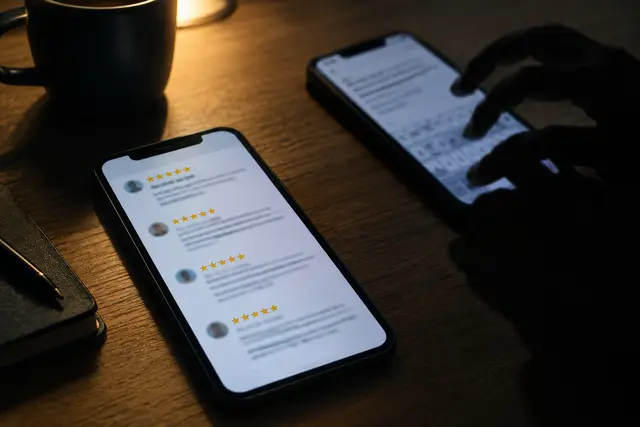
- Reviews that look too perfect. A page of five-star reviews posted in the same week is a warning sign. Our guide on how online reviews get faked in the UAE shows the patterns to look for.
Checklist before you book
Run through this before you pay anything:
- The clinic's facility licence is on display and matches the name on the register.
- You know the name of the doctor who will treat or supervise you, and you have looked them up.
- You had a face-to-face consultation, and you were asked about your medical history.
- For laser: you know the device, the number of sessions planned and exactly which areas the package covers.
- For Botox: the quote states the brand and the number of units, and you saw the sealed product.
- You signed a written consent and received aftercare instructions.
- The package terms say what happens if you need to pause or cancel.
- You have a receipt that shows the clinic's name and the VAT, if charged.
If you also book massages or facials, our guide to massage in Dubai and how to pick a licensed spa covers the same kind of checks for spas.
When you are ready, compare licence-checked dermatology and skin clinics on Moathaq and request free quotes from clinics whose licences we have checked.
Any AED amounts in this guide are typical ranges for Dubai as of October 2026; prices in other emirates are often similar or lower. They are not quotes and not offers: real prices depend on the job, the company and the date, so ask for written quotes.
Frequently asked questions
How much does laser hair removal cost in Dubai?
As of November 2026, typical prices per session are AED 100 to 500 for underarms, AED 150 to 800 for the bikini area, AED 300 to 2,000 for full legs and AED 450 to 3,500 for a full body. Packages of 6 to 8 sessions usually cost less per session.
What is the Botox price in Dubai?
Typically AED 30 to 60 per unit for the original brand as of November 2026, or around AED 800 to 1,500 per area at clinics that price by area. Ask for the brand and the number of units in writing.
How many laser hair removal sessions will I need?
Most clinics plan about 6 to 8 sessions per area, 4 to 8 weeks apart, and some people need more or a later top-up. Your skin, your hair colour and the area all affect the number.
Can a beauty salon do laser hair removal in Dubai?
No. Under the DHA standard, laser and IPL hair removal must be done in a DHA-licensed health facility, by a doctor or by a technician who holds the DHA Laser Hair Technician title, under a physician's supervision.
Who is allowed to inject Botox in Dubai?
Cosmetic Botox is a prescription-only medicine. In Dubai it may only be given by a trained and privileged licensed physician in a DHA-licensed facility, after a face-to-face consultation, and not to anyone under 18.
How do I check if a dermatologist near me is licensed?
In Dubai, search the doctor's name and the clinic in the DHA's Sheryan medical directory on the DHA website. In Abu Dhabi ask for the DoH licence number, and in the northern emirates the MOHAP licence number, and check it with that authority.
Is Botox haram?
This is a religious question, and we do not give rulings. If it matters to you, ask a scholar you trust before you book.