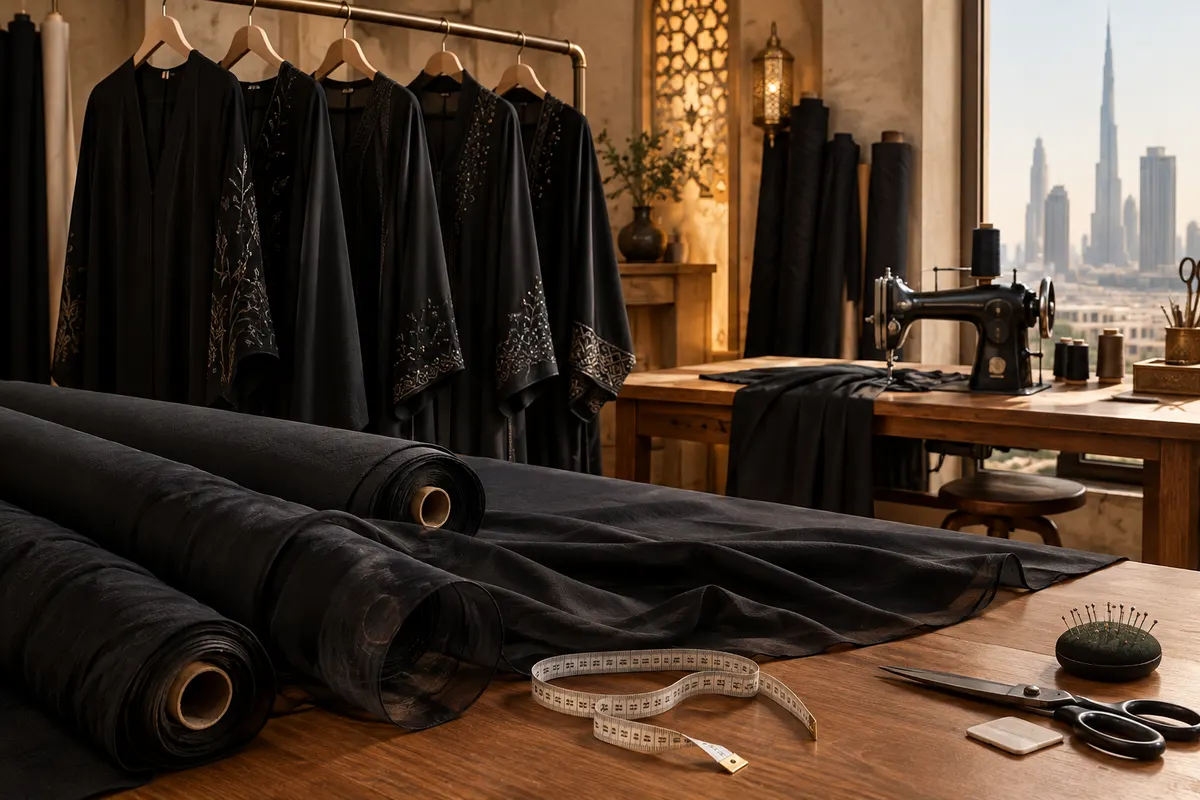
The short answer: what an abaya and a tailor cost in Dubai
A plain ready-made abaya in Dubai typically costs AED 100 to 400, and you can find basic pieces in the older souks for less. A custom-tailored abaya in a good everyday fabric typically costs AED 250 to 600, and an embroidered or beaded design often runs AED 500 to 1,500 or more. These are typical prices as of November 2026, and they vary with fabric, finish and where you shop.
Looking for a tailor in Dubai near you for alterations? Simple hemming usually costs AED 20 to 50, and suit alterations AED 100 to 300, or up to AED 500 for a full refit.
Before you hand over fabric or a deposit, check three things: the shop has a valid trade licence, you get a written order slip with your measurements, price and collection date, and the deposit is written on that slip. This guide explains each step, from choosing an abaya to collecting it on time before Eid.
Types of abaya and the fabrics you will hear about
Most abayas sold in the UAE fall into a few groups. Knowing the names helps you compare prices fairly.
- Everyday abaya: plain or lightly trimmed, in black or muted colours, made to be worn often and washed easily.
- Occasion abaya: for weddings, Eid and evening events, with embroidery, beading, lace, stones or contrast panels.
- Closed abaya: worn over the head or fastened at the front with poppers or hooks, the more traditional cut.
- Open abaya: worn like a long coat over an outfit, often with a belt or a single fastening.
- Cuts: butterfly (farasha), A-line, kimono sleeve, bisht style and straight cut are the names you will see most.
The fabric drives most of the price and comfort:
- Nida: a soft, matte, light fabric that drapes well and is popular for everyday wear. Quality varies a lot, so feel it before you buy.
- Crepe: slightly textured, heavier, holds its shape and hides creases. Good for both everyday and occasion pieces.
- Chiffon and georgette: light and sheer, usually layered or used for sleeves and overlays, more delicate to wash.
- Linen and cotton blends: cooler in summer but crease easily.
- Silk and silk blends: for special occasions, at the top of the price range.
Ask what the fabric is, where it was made and how to wash it. If the seller cannot tell you, compare with another shop.
Ready-made or custom-tailored?
A ready-made abaya is the quickest and usually the cheapest option. You see the finished piece, try it on and take it home the same day. Many shops will shorten the hem or the sleeves for a small fee, often while you wait or by the next day. The downside is fit: ready-made sizes rarely suit very tall or petite women without changes, and popular designs are worn by many people.
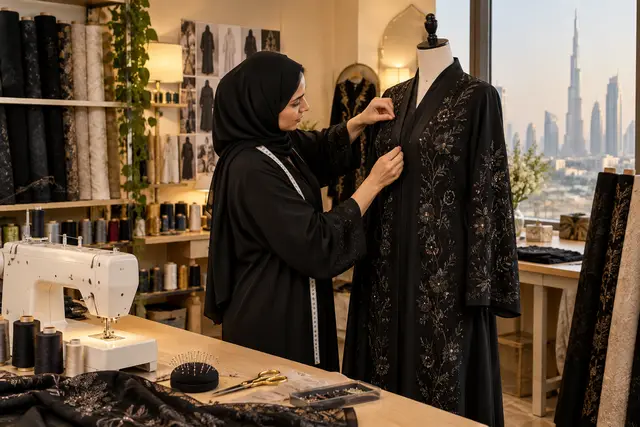
A custom-tailored abaya is made to your measurements, in the fabric and cut you choose. It costs more and takes days, not minutes, but the length, the sleeve width and the shoulders fit you. It is also the only way to get a specific design copied from a photo or a family piece.
A middle route is common: buy a ready-made abaya you like and pay a tailor to adjust it. For the length alone this usually costs AED 20 to 60. If the shoulders and sleeves also need changes, the price rises and a custom piece may make more sense.
Where to buy an abaya in Dubai, including cheap options
If you are wondering where to buy a cheap abaya in Dubai, start with the older trading districts. The souks and side streets of Deira, around the Naif area, and the textile streets of Bur Dubai and Karama have many small abaya and fabric shops. Prices there start low, bargaining is normal and you can often order a tailored piece from fabric bought next door. Quality varies from shop to shop, so check the stitching and the fabric before you pay.
Other kinds of places to shop:
- Malls and shopping centres: more consistent quality, fixed prices, card payment and a receipt. Expect mid-range to high prices, with sales around the end of Ramadan and in summer.
- Neighbourhood abaya boutiques: in residential areas such as Al Barsha, Mirdif and Al Nahda. Many offer made-to-measure and know their regular customers' sizes.
- Designer boutiques and ateliers: for occasion and bridal abayas, with fittings by appointment and prices that can reach several thousand dirhams.
- Online boutiques and social media sellers: convenient, with many offering custom measurements. Check the return policy, the delivery time and that the seller is a licensed business before paying in full.
- Sharjah: the old Al Mujarrah district has a well-known tailoring street that specialises in traditional Emirati women's dress and embroidery. Haggling is expected there, and embroidered work can take weeks.
You can compare licence-checked tailors in Dubai, tailors in Deira and tailors in Al Barsha on Moathaq.
Typical prices: abayas, tailoring and alterations
These are typical prices in Dubai as of November 2026. Sharjah and Ajman are often somewhat cheaper. Always confirm whether the price includes the fabric.
Abayas
- Basic ready-made abaya in a souk: from about AED 50 to 150.
- Ready-made everyday abaya in a mid-range shop or online: AED 150 to 400.
- Ready-made abaya in a mall or boutique: AED 300 to 1,000.
- Custom-tailored plain abaya, fabric included: AED 250 to 600.
- Embroidered, beaded or lace occasion abaya, tailored: AED 500 to 1,500, and designer pieces from AED 1,000 to 3,000 or more.
- Extras such as a full lining, a matching shayla or hand embroidery: often AED 50 to 300 each, depending on the work.
Other tailoring
- Hemming trousers or a skirt: AED 20 to 50.
- Taking in or letting out a dress: AED 50 to 250.
- Suit alterations: AED 100 to 300 for basic work, up to AED 500 for a full refit.
- Made-to-measure men's suit: from about AED 800 to 2,500 in mid-range shops, and much more for premium fabrics.
- Kandura stitching, standard fabric included: commonly AED 200 to 600, more for premium fabric or detailed work.
- Shirt or trouser tailoring with fabric: often from about AED 75 to 200 a piece.
What pushes the price up
- Fabric: premium crepe, imported nida and silk cost more.
- Handwork: hand embroidery, beading and stones take hours and are priced accordingly.
- Urgency: express orders in the weeks before Eid often carry a surcharge.
- Location: shops in malls and central areas charge more than shops in older districts.
How a fitting and measurements work
A good tailor takes more measurements than you expect. For an abaya that usually means the full length from shoulder to floor in the shoes you will wear, shoulder width, bust, sleeve length, wrist and arm width, and sometimes hips and back length.
- Bring your shoes and the outfit you will wear underneath. The length depends on both.
- Bring a reference. A photo of the design, or an abaya that already fits you well, saves guesswork.
- Agree every detail clearly: cut, sleeve style, fastening, lining, embroidery position and colour of thread.
- Get the written order slip before you leave. It should list your measurements, fabric, design notes, total price, deposit paid and collection date.
- Ask for a fitting for any tailored or occasion piece. One fitting before the final stitching catches most problems.
- Try it on at collection, in the shop, before you pay the balance.
Many tailors keep your measurements on file, which makes the next order quicker. Ask for a copy for yourself as well.
Turnaround times, and the Ramadan and Eid rush
Outside busy periods, a plain tailored abaya usually takes 3 to 10 days, and an embroidered or beaded one 1 to 3 weeks. Hemming and simple alterations are often done the same day or within 1 to 3 days, and suit alterations within about a week.
The month before Eid al-Fitr is the busiest time of the year for abaya shops and tailors, followed by the weeks before Eid al-Adha and the winter wedding season. In those weeks, turnaround times can double, express charges appear and some tailors stop taking orders. If you need a piece for Eid or a wedding:
- Order at least three to four weeks ahead, and earlier for heavy embroidery.
- Ask for the collection date in writing and ask what happens if it is missed.
- Keep a buffer of a few days for a final alteration.
If you are planning a wedding, our guide to planning a wedding in the UAE puts outfit orders on the overall timeline, alongside bridal makeup artists and event planners.
How to check a tailor before you pay a deposit
Problems with tailors usually come down to three things: a missed date, a poor fit, or a shop that closes with customers' fabric and deposits. A few checks protect you from all three.
- Trade licence: every tailoring shop needs a valid trade licence from the emirate's economic department, such as the Department of Economy and Tourism in Dubai. Ask for the licence number and check it. Our guide on how to verify a Dubai trade licence shows how.
- Written order slip: with your name, measurements, fabric, design, price, deposit and collection date. A shop that only writes your name on a scrap of paper gives you nothing to rely on later.
- Deposit: a deposit of around a third to a half of the price is common for tailored work. Pay by card or bank transfer where you can, and make sure the amount is written on the slip.
- Your fabric: if you supply fabric, note its length and colour on the slip, and ask how much will be left over.
- Remake policy: ask what happens if the piece does not fit or does not match the agreed design. Most good tailors adjust free of charge within a set period.
Moathaq lists tailoring businesses whose trade licences we have checked, so you can start from a shortlist.
Red flags and a checklist before you order
Other red flags:
- A price far below every other shop for the same fabric and work. The difference usually shows up in cheaper fabric or rushed stitching.
- A promise to finish a heavily embroidered abaya in two days in the week before Eid.
- An online seller who only takes bank transfers to a personal account and has no business name.
- No fitting offered on an occasion or bridal piece.
- Pressure to decide on the spot, or a refusal to let you see finished work.
Checklist
- Decide on ready-made, adjusted ready-made, or fully tailored.
- Choose the fabric by touch, and ask how to wash it.
- Check the shop's trade licence.
- Bring your shoes, the under-outfit and a reference photo.
- Get a written slip with measurements, price, deposit and date.
- Book a fitting for tailored and occasion pieces.
- Order three to four weeks before Eid or a wedding.
- Try the piece on in the shop before paying the balance.
When you are ready, compare licence-checked tailors and abaya makers in Dubai, Sharjah and across the UAE and request free quotes, or start with tailors in Sharjah.
Any AED amounts in this guide are typical ranges for Dubai as of October 2026; prices in other emirates are often similar or lower. They are not quotes and not offers: real prices depend on the job, the company and the date, so ask for written quotes.
Frequently asked questions
Where can I buy a cheap abaya in Dubai?
The older districts are the cheapest: the souks and side streets of Deira around Naif, and the textile streets of Bur Dubai and Karama. Basic ready-made pieces start from about AED 50 to 150 as of November 2026. Check the stitching and fabric, and expect to bargain.
How much does a tailor charge for a custom abaya in Dubai?
Typically AED 250 to 600 for a plain tailored abaya with fabric included, and AED 500 to 1,500 or more for embroidered or beaded designs, as of November 2026. Fabric choice and handwork make the biggest difference.
How long does a tailored abaya take?
Usually 3 to 10 days for a plain piece and 1 to 3 weeks for embroidery. Before Eid al-Fitr, times can double, so order three to four weeks ahead.
What is the difference between nida and crepe?
Nida is soft, light and matte, and drapes well for everyday wear. Crepe is heavier and slightly textured, holds its shape and hides creases. Both come in many qualities, so feel the fabric before buying.
How much does a tailor near me charge for hemming?
Simple hemming of trousers, a skirt or an abaya usually costs AED 20 to 60 in Dubai as of November 2026, and is often ready the same day or the next.
Should I pay a deposit to a tailor?
A deposit of about a third to a half is normal for tailored work. Make sure it is written on the order slip with the total price and collection date, and avoid paying the full amount upfront.