The short answer: how far ahead to plan and what it costs
For a wedding in the UAE, start about twelve months ahead if you want a popular hotel or hall on a weekend between October and April, the busiest season. Six months is workable for a smaller wedding or an off-peak date.
The budget depends mostly on the number of guests, because the venue and catering are usually priced per head. As of November 2026, typical Dubai prices for the main vendors are:
- Wedding planner, full planning: AED 15,000 to 60,000, or 10 to 15 percent of the budget.
- Day-of coordination only: AED 5,000 to 15,000.
- Wedding photographer, full day: AED 5,000 to 20,000.
- Bridal makeup and hair: AED 1,500 to 6,000.
- Bridal henna: AED 500 to 2,500.
Prices in the other emirates are often similar or somewhat lower. Before you pay any deposit, check that the vendor holds a valid trade licence for the work and that the contract spells out the cancellation terms. This guide gives you a month-by-month wedding planning timeline, a budget by component, and the checks that protect your money.
How to plan a wedding timeline: twelve months to the wedding week
Use this as a starting point and move items earlier if your date falls in the peak season or close to a public holiday.
12 to 10 months before
- Agree the total budget and who is contributing.
- Draft the guest list. A rough number is enough to shortlist venues.
- Decide whether to hire a planner. If you do, hire them now, before the venue.
- Visit venues and hold a date. Ask what the package includes.
9 to 7 months before
- Sign the venue contract and pay the first deposit.
- Book the photographer and videographer. Good ones are booked early for weekend dates.
- Book the decor and stage designer if the venue does not provide one.
- If you are ordering a made-to-measure dress or abaya, choose the designer now.
6 to 4 months before
- Book the bridal makeup artist and henna artist, and schedule a makeup trial.
- Start dress or abaya fittings, and allow time for two or three.
- Plan the music or entertainment and any separate events, such as a henna night.
- Start the paperwork to register the marriage, if you have not already.
3 months to 1 month before
- Send invitations and track replies.
- Confirm the final menu at a tasting.
- Agree the running order of the day with the planner and the venue.
- Pay the staged instalments on the dates in each contract, against invoices.
The wedding week
- Confirm the final guest number with the venue, usually required a few days before.
- Final fitting and collection of the dress.
- Henna, usually one or two days before the wedding so the colour has time to darken.
- Make a contact sheet with every vendor's arrival time and phone number, and give it to one person who is not the bride or groom.
A typical UAE wedding budget, by component
These ranges are typical Dubai prices as of November 2026. They are a guide for planning, not quotes, and they move a lot with the date, the venue and the guest count.
- Venue and catering: the largest line in almost every budget. Hotels and halls usually sell packages priced per guest, and per-head prices range widely, from a few hundred dirhams for a buffet to much more for a plated dinner at a five-star hotel. Ask for the minimum guest number and what the package includes: hall hire, stage, sound, lighting, service staff and soft drinks.
- Wedding planner: AED 15,000 to 60,000 for full planning, or 10 to 15 percent of the budget. Day-of coordination is AED 5,000 to 15,000.
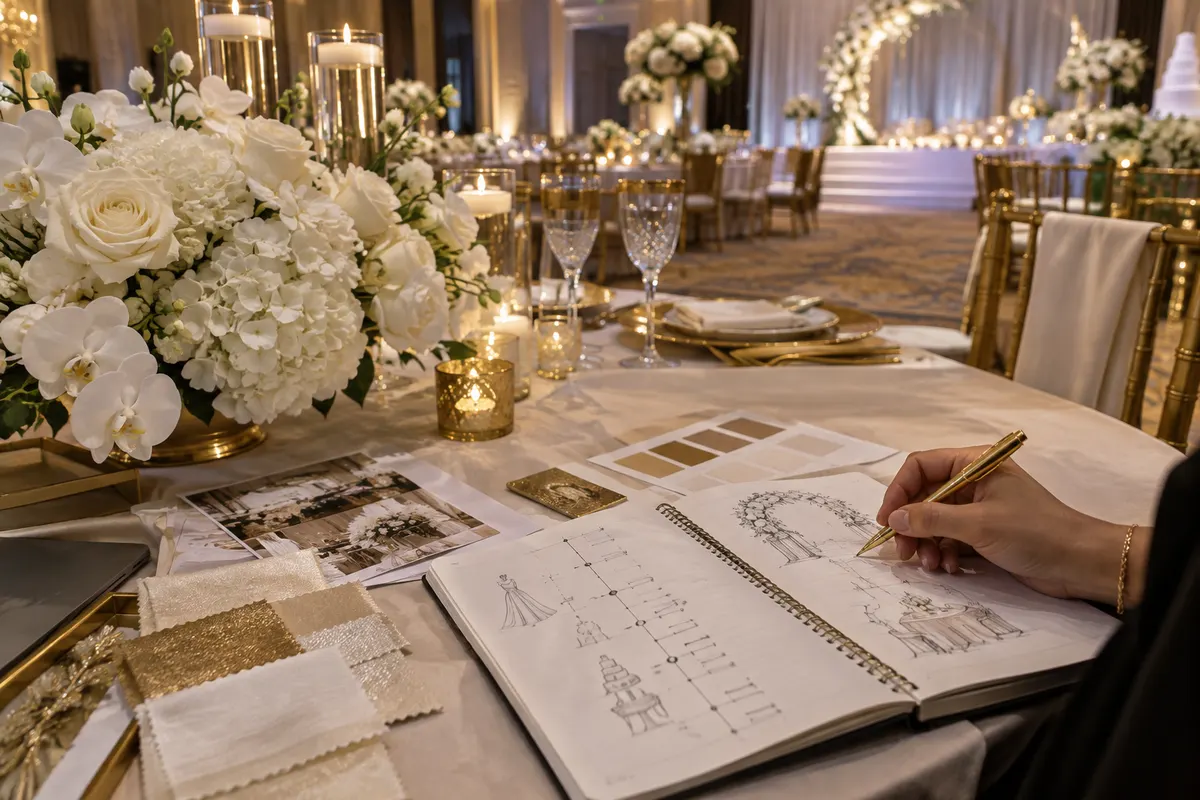
- Decor and stage: often the second-largest line after catering, and the hardest to compare. Ask for an itemised quote with flowers, stage, lighting and setup listed separately.
- Photographer: AED 5,000 to 20,000 for a full wedding day. Video, a second shooter, a drone where permitted, and printed albums usually cost extra.
- Bridal makeup and hair: AED 1,500 to 6,000, with a trial at AED 500 to 1,500, sometimes deducted from the final fee. Makeup for family or guests is AED 300 to 800 each.
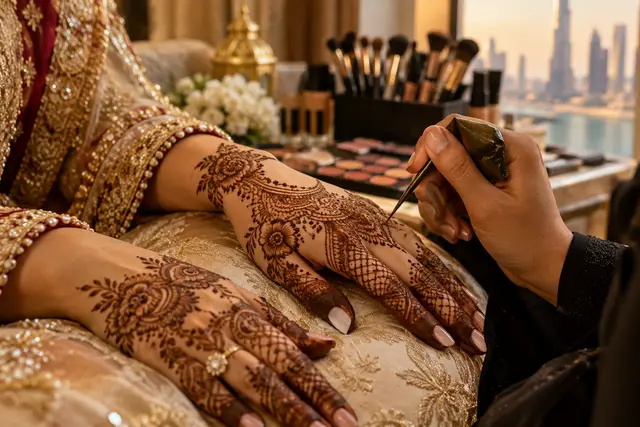
- Henna: AED 500 to 2,500 for the bride, depending on how far the design goes on the hands and feet. Guest henna is about AED 50 to 200 per person.
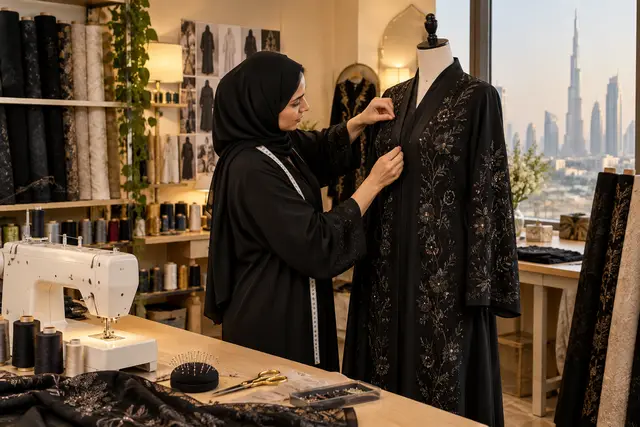
- Abaya and dress tailoring: a made-to-measure abaya costs AED 300 to 1,500, and an embroidered or designer abaya AED 1,500 to 5,000. Bridal gowns vary too widely for a useful range, so get quotes from two or three designers. Our guide to abayas and tailors in Dubai covers fittings and tailoring costs.
Keep 10 percent of the total aside for extras: overtime, a last-minute guest increase, transport and tips. VAT of 5 percent is added by VAT-registered vendors, so ask whether each quote includes it.
The legal side, briefly: registering the marriage
The celebration and the legal marriage are separate. A planner organises the event. The marriage itself is registered through the courts, and you should start that early because it has its own documents and appointments.
- Muslim marriages are concluded and registered through the courts, for example through the Ministry of Justice or the local courts in emirates with their own judicial departments, such as Dubai Courts and the Abu Dhabi Judicial Department. Official guidance says a premarital medical screening certificate is required for both parties before the contract can be registered.
- Non-Muslim residents can have a civil marriage under Federal Decree-Law No. 41 of 2022 on civil personal status. Civil marriages are handled by the civil family courts, for example at the Abu Dhabi Judicial Department and Dubai Courts, where both parties appear before a judge. Some couples register through their own embassy or religious institution instead.
The requirements, documents and fees change from time to time and differ between courts. Check the current rules on the relevant court's website or the UAE government portal before you set the date, and ask a legal consultant if your situation is not straightforward. This guide does not give legal or religious advice.
How to choose and check wedding vendors
Most wedding problems in the UAE are not about style. They are about a vendor who takes a deposit and then disappears, changes the team, or delivers less than agreed. A few checks before you pay prevent most of this.
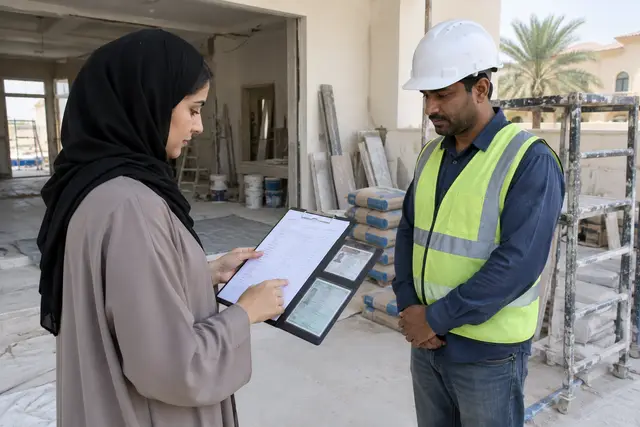
- Check the trade licence. Planners, photographers, makeup artists, henna artists and tailors should hold a trade licence from the emirate's economic department, with an activity that matches the work: event management, photography, beauty or tailoring. Ask for the licence number and check that it is valid and in the same name as the invoice.
- See complete work, not highlights. Ask a photographer for two or three full wedding galleries, not a highlight reel. Ask a planner for a sample budget and running order from a past wedding.
- Meet the person who will do the work. Some studios show the founder's portfolio and send a junior on the day. Put the name of the lead photographer or makeup artist in the contract.
- Ask about commission. Some planners earn commission from suppliers. That is not wrong, but you should know about it and see the supplier quotes.
- Check permits. Ask the planner which permits your event needs, for example for an outdoor setup or entertainment, and who applies for them. Private events at a licensed venue usually follow the venue's own approvals.
When you are ready to shortlist, compare licence-checked event planners and ask each one the same questions. You can also compare wedding photographers, bridal makeup and henna artists and tailors for the dress or abaya.
Contracts, deposits and cancellation
Every vendor you pay should give you a written contract or a detailed booking confirmation. Check that it includes:
- The date, times and location, and the hours of coverage or service.
- What is included, item by item, and what costs extra, such as overtime per hour.
- The named lead person and the size of the team.
- The payment schedule. A deposit to hold the date, staged payments and the final payment. Pay against invoices in the company's name.
- Cancellation and date change. What you lose if you cancel, what happens if the vendor cancels, and whether a deposit can move to a new date.
- Delivery, for photographers: how many edited photos, in what format, and by when.
- Who pays for permits, for planners and decor.
Deposits for weddings are often non-refundable, because the vendor turns away other bookings for your date. That is normal. What matters is that the terms are written down before you pay, and that you pay the business, not a personal account. Our guide on how to check a contractor before paying applies to wedding vendors too.
Red flags when booking wedding vendors
Be careful if you see any of these:
- No trade licence, or a licence in a different name from the one on the invoice or the bank account.
- Payment to a personal account or cash only, with no receipt.
- Pressure to pay today because "another couple wants the date".
- A portfolio of only highlights, or photos you find on other vendors' pages.
- No written contract, or a contract without cancellation terms.
- A price far below the others for the same scope. Ask what is missing.
- Reviews that all look alike or appeared in the same few days.
- Vague answers on who will be there on the day.
If something goes wrong, keep all messages, invoices and receipts. A paper trail is your best protection.
Checklist before you book
Run through this for every vendor before you sign or pay.
- Is the trade licence valid, with an activity that matches the work, and in the same name as the invoice?
- Have you seen complete work from a past wedding, not only highlights?
- Is the lead person named in the contract?
- Does the quote list what is included and what costs extra, with VAT shown?
- Is the payment schedule written, with the deposit, staged payments and final payment?
- Are the cancellation and date-change terms clear?
- For the planner: who pays for permits, and do they take supplier commission?
- For the photographer: how many edited photos, in what format, and by when?
- For makeup and henna: is a trial included, and what time will they arrive?
- For tailoring: how many fittings, and what is the final collection date?
When your shortlist is ready, compare licence-checked wedding and event planners and request free quotes from businesses whose trade licence we have checked.
Any AED amounts in this guide are typical ranges for Dubai as of October 2026; prices in other emirates are often similar or lower. They are not quotes and not offers: real prices depend on the job, the company and the date, so ask for written quotes.
Frequently asked questions
How far ahead should I plan a wedding in the UAE?
About twelve months ahead for a popular venue on a weekend between October and April. Six months can work for a smaller wedding or an off-peak date. Book the venue and the planner first, then the photographer.
How much does a wedding planner in Dubai cost?
As of November 2026, full wedding planning typically costs AED 15,000 to 60,000, or 10 to 15 percent of the budget. Day-of coordination is AED 5,000 to 15,000. Prices in other emirates are often similar or somewhat lower.
How much does a wedding photographer in Dubai charge?
Typically AED 5,000 to 20,000 for a full wedding day as of November 2026. Video, a second shooter and printed albums usually cost extra. Ask how many edited photos you will get and when.
How much does bridal henna cost in the UAE?
Bridal henna typically costs AED 500 to 2,500, depending on how far the design extends on the hands and feet and how detailed it is. Guest henna is about AED 50 to 200 per person. It is usually done one or two days before the wedding.
Do I need to register the marriage separately from the wedding?
Yes. The marriage is registered through the courts, for example the Ministry of Justice, Dubai Courts or the Abu Dhabi Judicial Department. Muslim marriages need a premarital screening certificate, and non-Muslim residents can choose a civil marriage under Federal Decree-Law No. 41 of 2022. Check the current requirements with the court.
Are wedding deposits refundable?
Often not, because the vendor holds the date for you. That is normal, but the terms must be written in the contract before you pay, including what happens if the vendor cancels or the date changes.