The short answer
As of November 2026, pest control in Dubai typically costs AED 150 to 400 for cockroaches or ants in a studio or one-bedroom flat, AED 350 to 900 for bed bugs in a flat, and AED 800 to 3,000 for termites in a villa. Prices in Sharjah, Abu Dhabi and the other emirates are often similar or a little lower.
The most important check is approval. A pest control company needs a trade licence with a pest control activity and an approval from the authority that regulates pest control in its emirate, such as Dubai Municipality in Dubai. Unapproved workers using unknown chemicals in a closed flat are a real danger, not just poor value.
This guide explains how to recognise the common UAE pests, how they are treated and how many visits it takes, how to stay safe, what warranties to expect, who pays in a rental and where DIY stops working.
Common UAE pests and the signs to look for
- Cockroaches: the small German cockroach lives in kitchens and bathrooms, often near the fridge motor, under the sink and in cupboard hinges. Signs are droppings like ground pepper, a musty smell and cockroaches seen at night. The larger American cockroach usually comes from drains and shafts.
- Bed bugs: small, flat, reddish-brown insects that hide in mattress seams, bed frames, headboards and sofa joints. Signs are itchy bites in a line on the skin after sleeping, tiny dark spots on sheets and the mattress edge, and shed skins. They travel in luggage and second-hand furniture.
- Termites: subterranean termites attack wood from below, especially in villas with gardens. Signs are mud tubes on walls or door frames, hollow-sounding skirting boards, wood that crumbles and small piles of wings near windows.
- Rodents: rats and mice come in from gardens, drains and building shafts. Signs are droppings, gnawed food packets or cables, scratching in the ceiling at night and grease marks along walls.
- Ants: trails in the kitchen or bathroom, usually towards food or water. Ants are mostly a nuisance, but a nest inside a wall needs a proper treatment rather than a spray.
Take clear photos, and if you can, keep one insect in a sealed bag. The technician can identify the pest faster, and the right identification decides the method.
How each pest is treated, and how many visits it takes
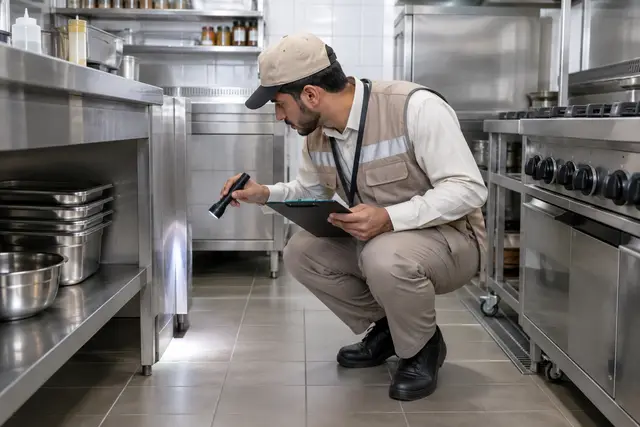
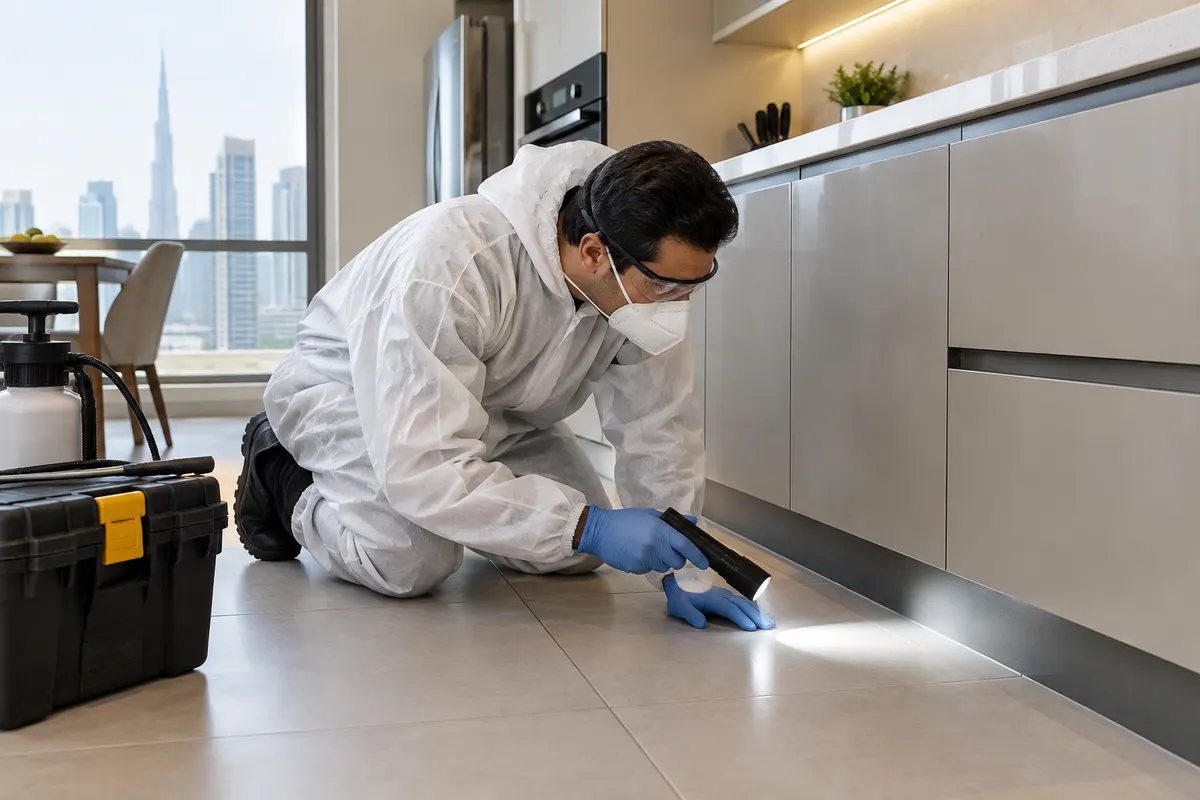
A good treatment starts with an inspection, then a method matched to the pest. A spray alone is rarely the answer.
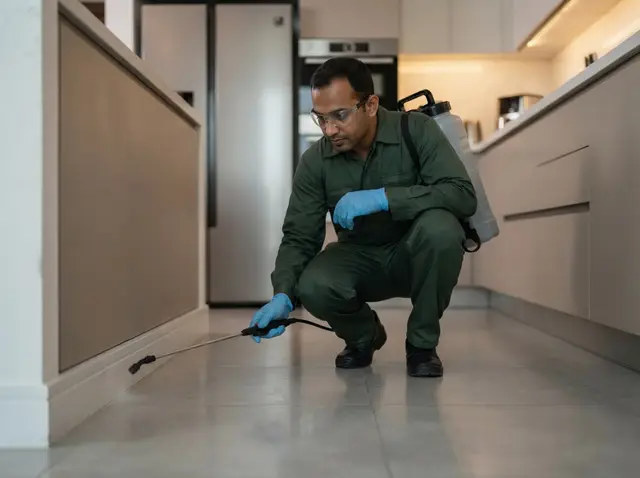
- Cockroaches: gel baits in cracks, hinges and behind appliances, sometimes with a residual spray along skirting and in drains. One visit is common for a light problem, with a follow-up after two to three weeks for a heavy one. Expect to see more cockroaches for a few days as the bait works.
- Bed bugs: a thorough treatment of mattresses, bed frames, sofas, skirting and sockets, with an insecticide or steam, and in some cases heat. Eggs usually survive the first treatment and hatch in about one to two weeks, so plan on at least two visits, usually 10 to 14 days apart, and sometimes a third.
- Termites: a liquid treatment injected into the soil or walls around the affected area, or bait stations around the villa that colonies feed on over weeks or months. Expect an inspection, a treatment and scheduled monitoring visits.
- Rodents: traps and tamper-proof bait stations, plus sealing the gaps where they get in. Usually two to four visits over a few weeks.
- Ants: baits that workers carry back to the nest, plus a residual treatment outside where needed. Often one visit, with a follow-up if the trail returns.
Ask the technician to explain the plan before they start: the method, the number of visits, what you need to do between them and when you can expect results.
Safety: pesticides, leaving home, children and pets
Pesticides sold and used in the UAE must be registered with the Ministry of Climate Change and Environment, and approved companies are expected to use registered products applied by trained technicians. Ask for the product names before the visit, and keep the service report that lists them.
Before a treatment:
- Put food, cutlery and children's toys away or seal them.
- Move pets out, cover fish tanks and switch off their air pumps if advised.
- Tell the technician about pregnancy, infants, asthma or allergies in the home. Gel baits and low-odour products are often possible.
During and after:
- Stay out for as long as the technician says, commonly 2 to 4 hours after a spray.
- Air the rooms when you return. Wipe kitchen counters before preparing food.
- Do not mop treated skirting or wash away gel baits for the period the technician gives you.
If anyone feels unwell after a treatment, leave the home, open windows if safe and seek medical help. In an emergency call 998 for an ambulance. Give the doctor the product names from the service report.
Who approves pest control companies in each emirate
Pest control is one of the few home services that needs an approval on top of a trade licence. The approving body differs by emirate.
- Dubai: Dubai Municipality's public health pest control section issues a no-objection certificate to a pest control company before it gets its trade licence, and publishes a list of authorised pest control companies on its website. You can also call Dubai Municipality on 800900. Our guide to Dubai Municipality pest control approval explains how to check a certificate step by step.
- Abu Dhabi and Al Ain: since May 2024 the Abu Dhabi Public Health Centre (ADPHC) has been responsible for public health pest control in the emirate, including the permits for pest control activities. Before that, the role sat with Tadweer.
- Sharjah: Sharjah Municipality issues a permit for the activity of controlling public health pests, alongside a trade licence from SEDD.
- Other emirates: ask the company which municipality permit it holds, and confirm it with that municipality.
In every emirate, also check the trade licence itself: the company name, the pest control activity and the expiry date. Our guide on verifying a trade licence shows how. A company approved in Dubai is not automatically approved to work in Abu Dhabi or Sharjah.
Typical prices and warranties as of November 2026
These are typical prices from approved companies in Dubai. In the other emirates they are often similar or somewhat lower. VAT of 5 percent is added where the company is registered.
- Cockroaches and ants, studio: AED 150 to 300
- Cockroaches and ants, one-bedroom: AED 200 to 400
- Cockroaches and ants, villa: AED 400 to 1,200, depending on floors and garden
- Bed bugs, flat: AED 350 to 900, usually for two visits
- Bed bugs, villa: often AED 1,200 or more, depending on the number of rooms affected
- Rodents, first visit: AED 250 to 600, with follow-ups extra
- Termites, villa: AED 800 to 3,000 for a local or bait treatment; a full soil treatment around a villa can cost more
- Annual home contract: AED 400 to 1,200, usually with quarterly visits
Warranties usually run 3 to 6 months for general pest treatment, 30 to 90 days for bed bugs and 1 to 5 years for termites, depending on the method. Get the warranty in writing, and check what voids it, such as not following the preparation instructions.
A quote far below these ranges usually means a single spray with no follow-up. Our pest control price guide has the full table.
Who pays in a rental
Start with the tenancy contract. Many UAE contracts make routine pest control the tenant's job and problems that come from the building, such as shared drains, shafts or termites in the structure, the landlord's. In Dubai, where the contract is silent, the rental law generally places maintenance of the property on the landlord. In the other emirates, check the local rental rules.
A few practical points:
- At move-in: inspect kitchens, bathrooms and mattresses on day one. If you find cockroaches or bed bugs, report them to the landlord in writing with photos the same week, because an infestation you inherit is a strong case for the landlord to pay.
- Bed bugs: they usually arrive in luggage or furniture, so landlords often argue the tenant brought them in. Report quickly and keep the technician's report on where they were found.
- Towers: cockroaches often move between flats through shafts. Tell the building management, because treating one flat alone rarely works.
If you expect the landlord to pay, get their agreement in writing before you book a large job, and keep every invoice and service report.
Where DIY stops working
Shop-bought gel baits and ant baits can handle a few cockroaches or a small ant trail. Keep counters dry, store food in sealed boxes, fix dripping taps and seal gaps around pipes. These habits also make any professional treatment last longer.
DIY usually fails with bed bugs, termites, rodents in the ceiling and heavy cockroach infestations. Over-the-counter sprays can scatter bed bugs into other rooms and make the problem harder to treat. For bed bugs, you can help by washing bedding at a high temperature, drying it on high heat, vacuuming seams and sealing the vacuum bag, but you still need an approved company.
Never buy unlabelled pesticides from small shops or online sellers, and never mix products. Once the pests are gone, a deep clean removes droppings and allergens. Our guide to deep cleaning and sofa cleaning in Dubai covers what that costs.
Red flags and a checklist before you book
Red flags
- A worker at your door or a flyer under it offering a cheap treatment, with no company name.
- A company that will not name the products or show its municipality approval.
- Any offer of fumigation tablets or gas for a flat or an occupied building.
- A promise to remove pests "forever", or a bed bug price for one visit only.
- No service report, no warranty in writing and cash only.
Checklist
- Photograph the pest and where you see it.
- Check the trade licence and the approval for your emirate.
- Ask for the method, the products, the number of visits and how long to stay out.
- Get the price, the warranty and what voids it in writing.
- Prepare the home as instructed, and move children and pets out.
- Keep the service report after every visit.
- In a rental, tell the landlord in writing and check the contract.
When you are ready, compare licence-checked pest control companies near you. To narrow it down by emirate, see pest control in Dubai, Sharjah and Abu Dhabi. Wherever you start, the pest control services page lets you request free quotes from businesses whose licences we have checked.
Any AED amounts in this guide are typical ranges for Dubai as of October 2026; prices in other emirates are often similar or lower. They are not quotes and not offers: real prices depend on the job, the company and the date, so ask for written quotes.
Frequently asked questions
How much does pest control cost in Dubai?
As of November 2026, typically AED 150 to 300 for cockroaches and ants in a studio, AED 200 to 400 for a one-bedroom flat and AED 400 to 1,200 for a villa from an approved company. Bed bugs cost AED 350 to 900 for a flat.
How do I get rid of bed bugs for good?
Use an approved company for at least two treatments 10 to 14 days apart, because eggs survive the first one. Wash and dry bedding on high heat, vacuum mattress seams and do not move items to other rooms. Shop sprays alone rarely work.
How do I find an approved pest control company in Dubai?
Dubai Municipality publishes a list of authorised pest control companies on its website, and you can call 800900. Ask the company for its approval and trade licence numbers and check that they match.
Who approves pest control companies in Sharjah and Abu Dhabi?
In Sharjah, Sharjah Municipality issues the pest control permit. In Abu Dhabi and Al Ain, the Abu Dhabi Public Health Centre has been responsible for public health pest control and its permits since May 2024.
How much does termite control cost for a villa in Dubai?
Typically AED 800 to 3,000 for a local or bait treatment, and more for a full soil treatment around the villa. Warranties run 1 to 5 years depending on the method, often with scheduled inspections.
Is pest control safe for children and pets?
With an approved company and registered products, and if you follow the instructions, the risk is low. Move children and pets out, stay away for the time given, usually 2 to 4 hours after a spray, and air the rooms. Ask for gel baits where possible.